
 sign in
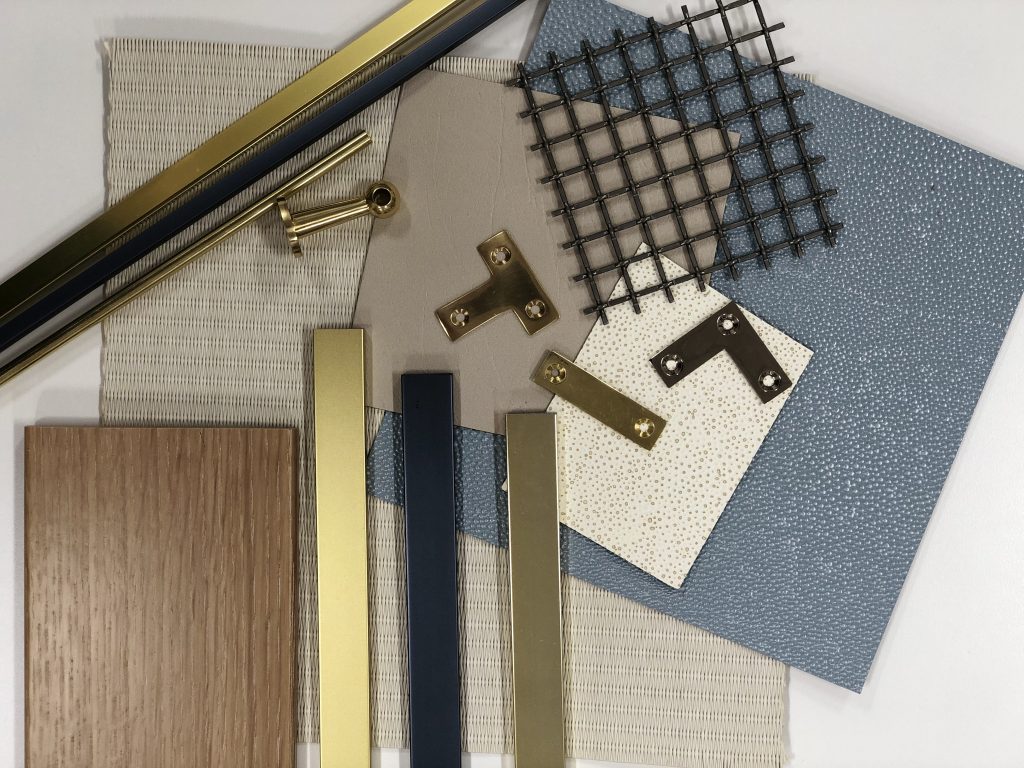
KBIS 2026 Highlights
From Booth W173
Explore the materials, design trends, and architectural components showcased by Designs of Distinction® at KBIS 2026.
Thank You for Visiting Booth W173!
KBIS 2026 brought together designers, builders, and architects from across the industry to explore new materials and design ideas.
At Designs of Distinction®, our booth featured materials and components designed to introduce texture, craftsmanship, and architectural detail into cabinetry, furniture, and interior millwork.
Below are a few highlights from the show.
Click on the drop-down arrows to see more. Click on links to jump-to specific sections on this page.
I. Featured at Booth W173
II. Beyond Booth W173: Partner Showcases
I. Materials Featured at Booth W173
Explore the curated collection of materials designers are using to bring texture and architectural detail into cabinetry and furniture design.
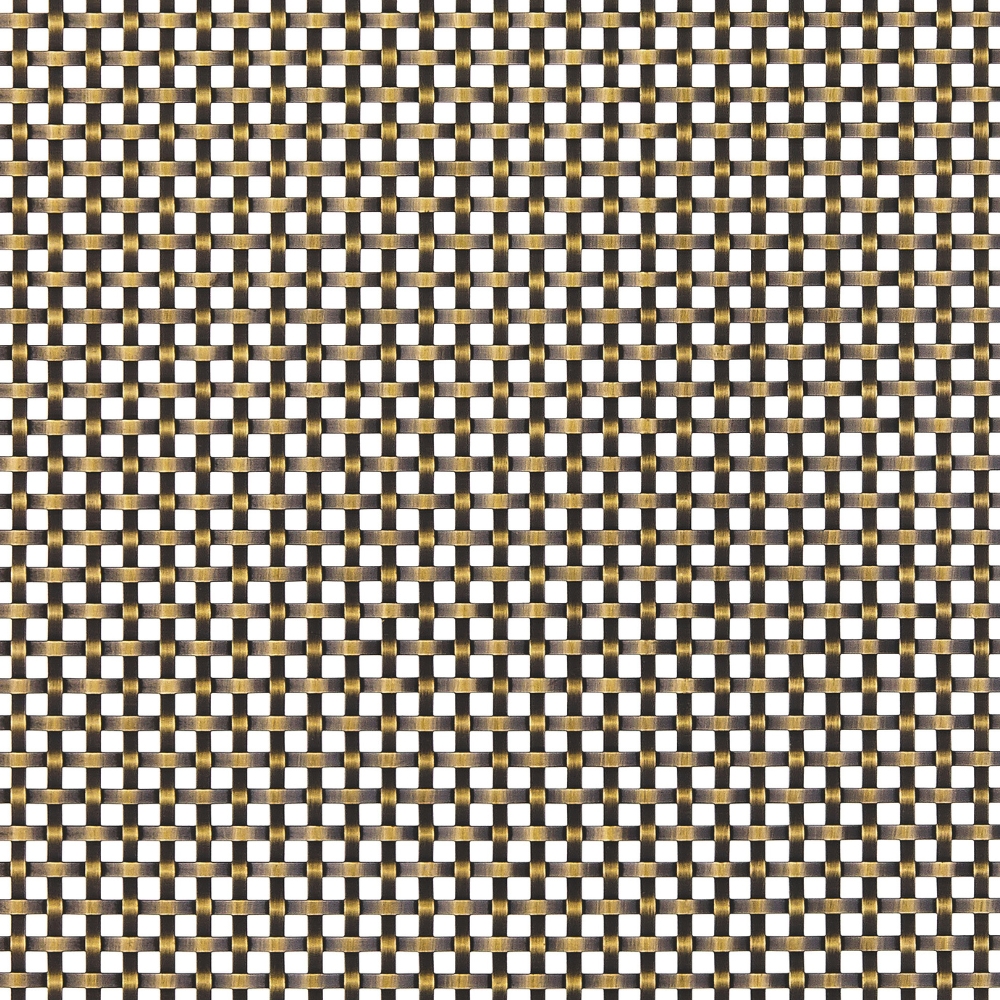
Decorative Grilles & Mesh
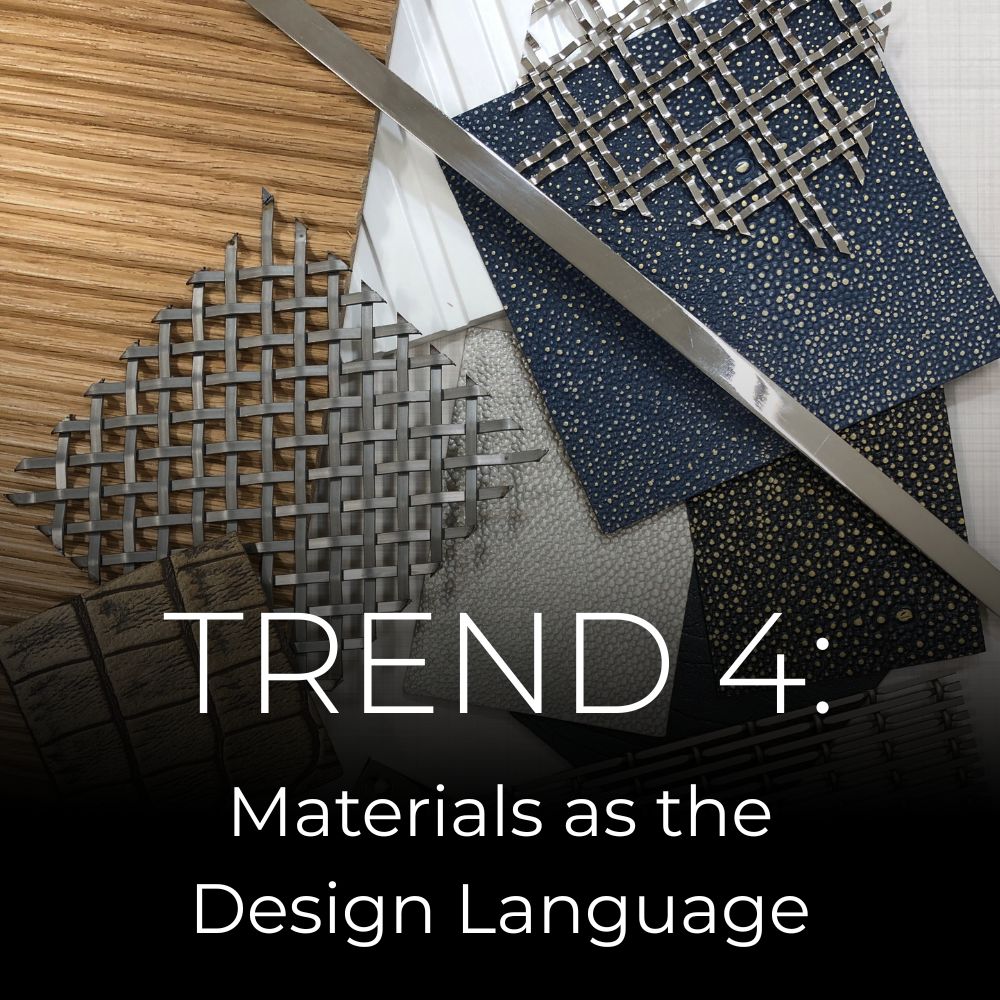
Decorative grilles and woven mesh introduce pattern, texture, and airflow while elevating the visual character of interior spaces.
Whether used for custom cabinet inserts or architectural accents, these versatile materials can be ordered by the sheet or Cut-to-Size to your exact specifications.
On the left: Style #RE25 in Antique Brass
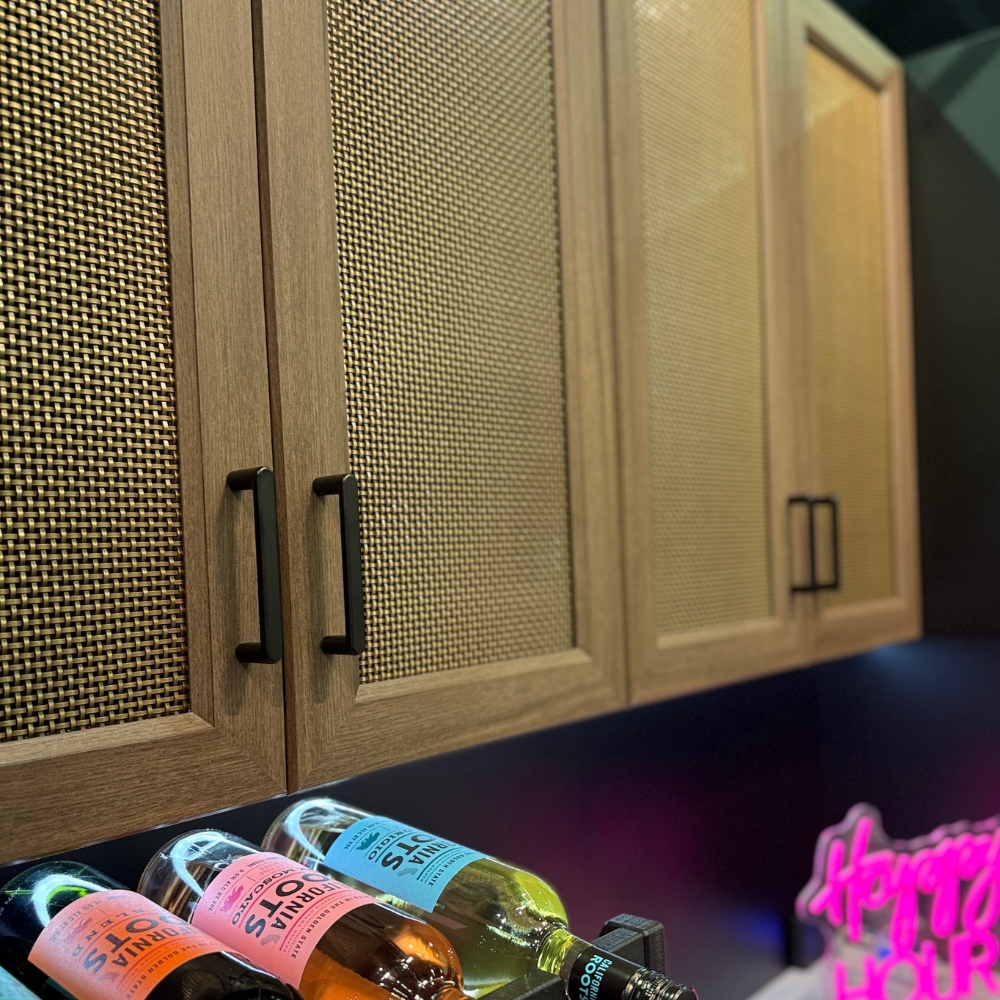
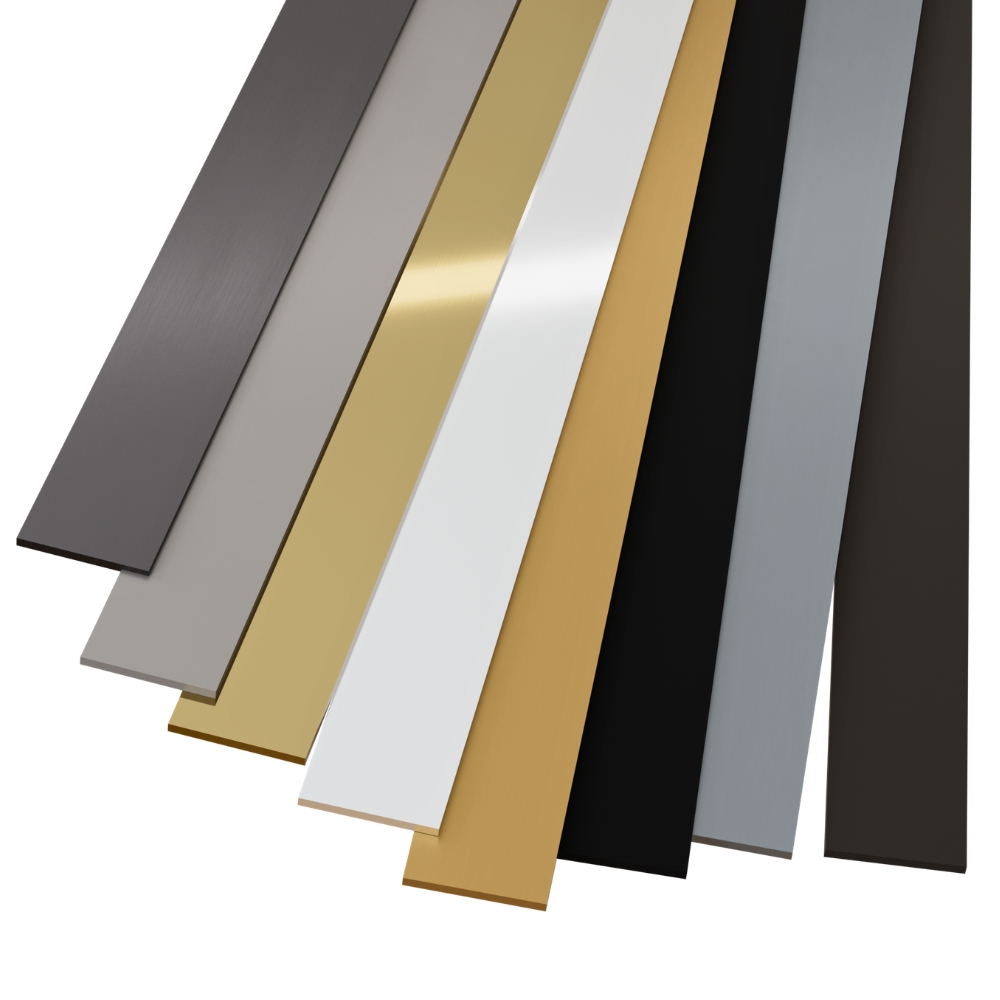
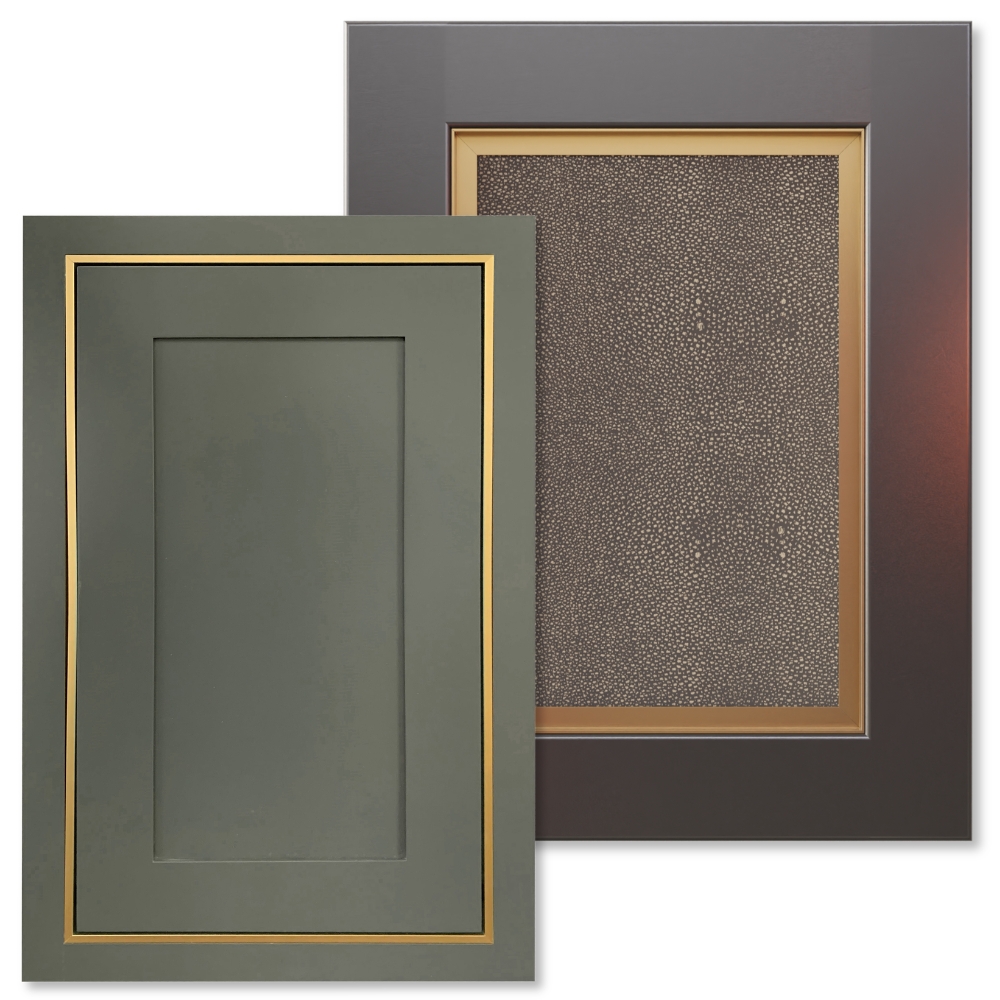
Metal Trim
Metal accents bring contrast and sophistication to cabinetry and millwork, adding architectural detail that complements both contemporary and classic interiors.
Designers are increasingly using these anodized aluminum trim profiles to frame panels, highlight edges, and introduce subtle material contrast to their spaces.
On the left: Style #01110171-1
Flexible Tambour
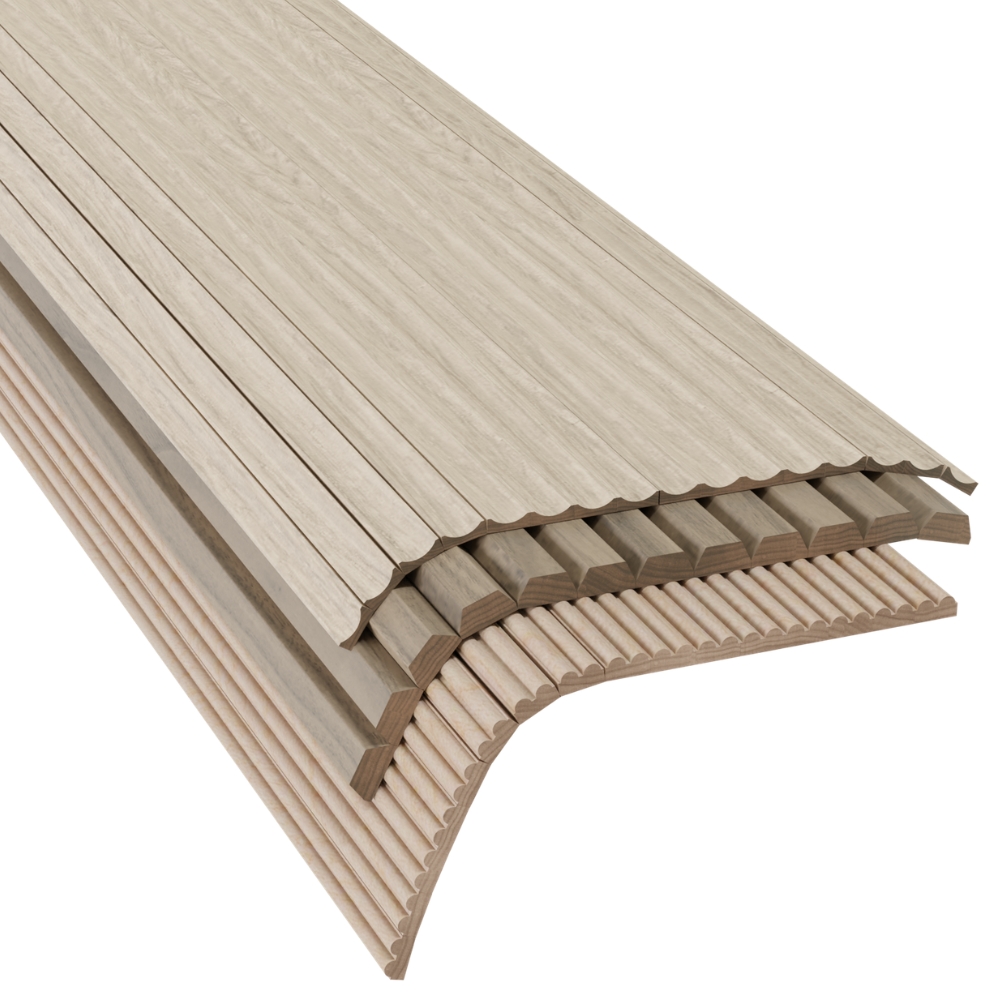
Flexible tambour panels continue to gain popularity thanks to their unique ability to introduce both tactile texture and fluid movement into custom cabinetry and furniture.
Available in solid American hardwood species, these panels effortlessly wrap around curved surfaces, radiused islands, and concealed storage to create a seamless architectural rhythm.
On the left (top to bottom): Style #403, Style #204, Style #107
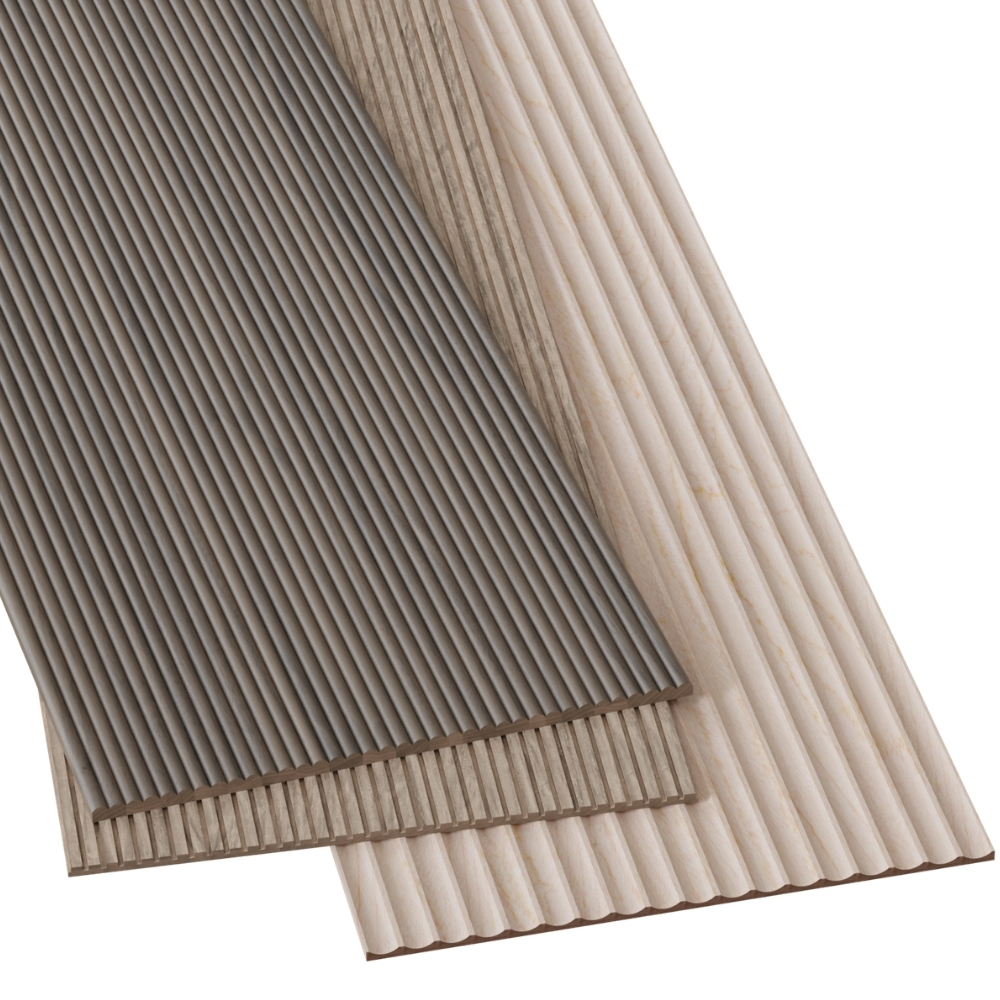
Rigid Beaded Panels
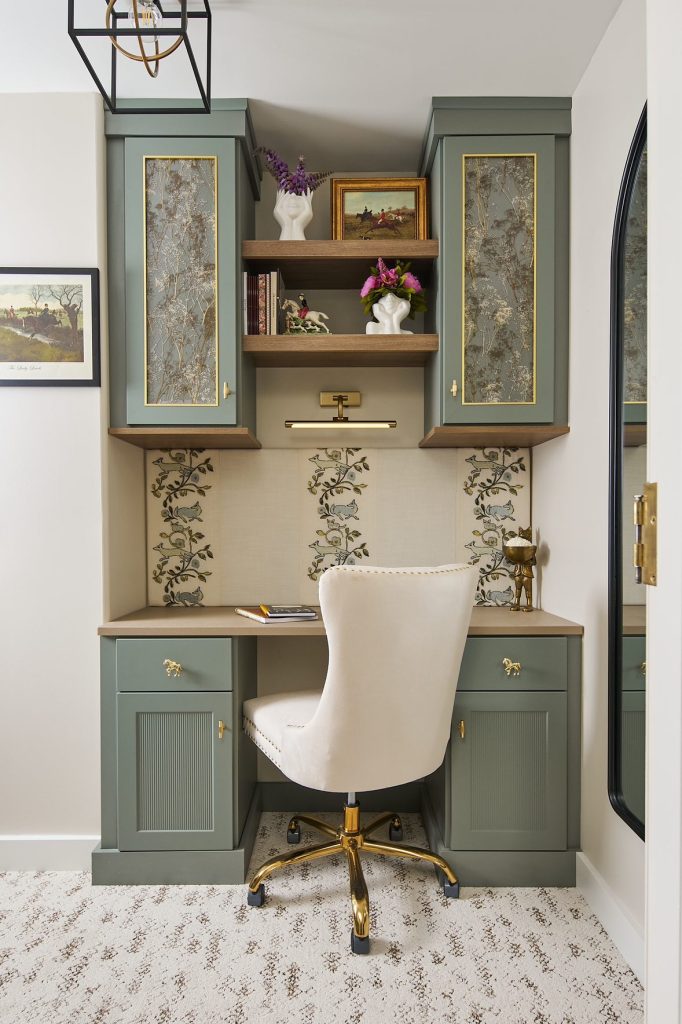
Rigid beaded and reeded panels deliver the sought-after linear texture of tambour in a sturdy, non-flexible format.
Ideal for flat applications like custom cabinet doors and architectural end panels, they provide structural support alongside beautiful dimensional detailing.
These panels allow designers to easily introduce craftsmanship and aesthetic rhythm into spaces where flexibility isn’t required.
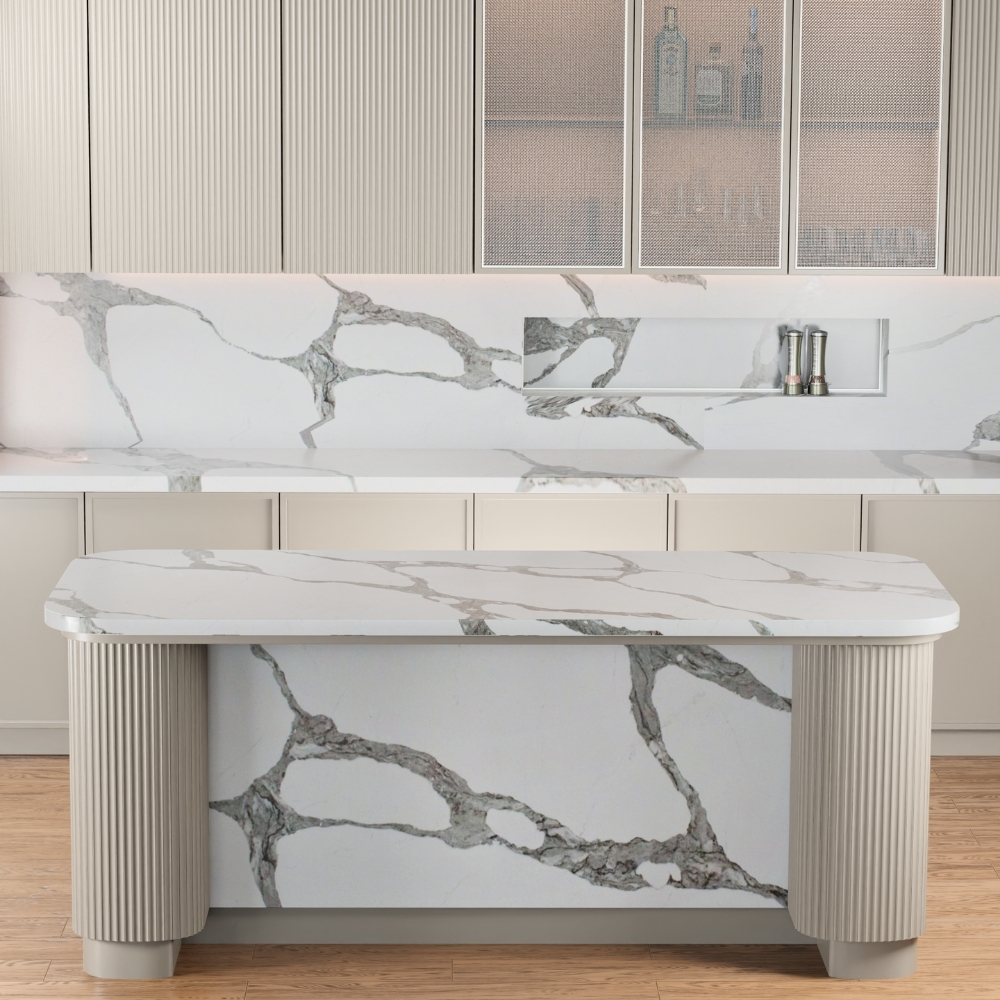
Ehem… Pardon the interruption!
CONTINUE READING: Application differences between Flexible & Rigid Panels.
Flexible Tambour for ONLAY Applications
Flexible Panels best used in ONLAY applications.
Because flexible tambour can bend and doesn’t require a rigid frame to prevent movement, it is perfect for seamlessly wrapping around structures or fitting directly into curved recesses:
- Radiused Islands: Wrapping the entire base of a curved kitchen island for a seamless, textured base (similar to the centerpiece island at Booth W173 and the Plain & Fancy island).
- Curved Custom Furniture: Applying the flexible panels directly to the curved base of a built-in seating area or bench (like the bench featured at the Plain & Fancy booth).
- Concealed Storage: Using the material to create sliding tambour doors that seamlessly track along a curved path to hide appliances or entertainment centers.
Rigid Panels for INLAY Applications
Rigid panels best used in INLAY applications (or in a “frame“).
Because rigid panels must be “captured within a frame” to account for humidity and heat movement, they are treated much like a decorative insert:
- Framed Wall Paneling: Using rigid panels as large wainscoting or full wall panels, secured within a grid of stiles and rails to allow the wood to safely expand and contract.
- Cabinet Door Inserts: Capturing the rigid reeded panel inside a traditional shaker-style cabinet door frame, acting just like a glass or decorative grille insert (seen in the “Pretty in Purple” display at Plain & Fancy’s booth).
- Architectural End Panels: Framing rigid panels onto the flat, exposed ends of cabinetry runs or kitchen islands to add structural, linear texture.
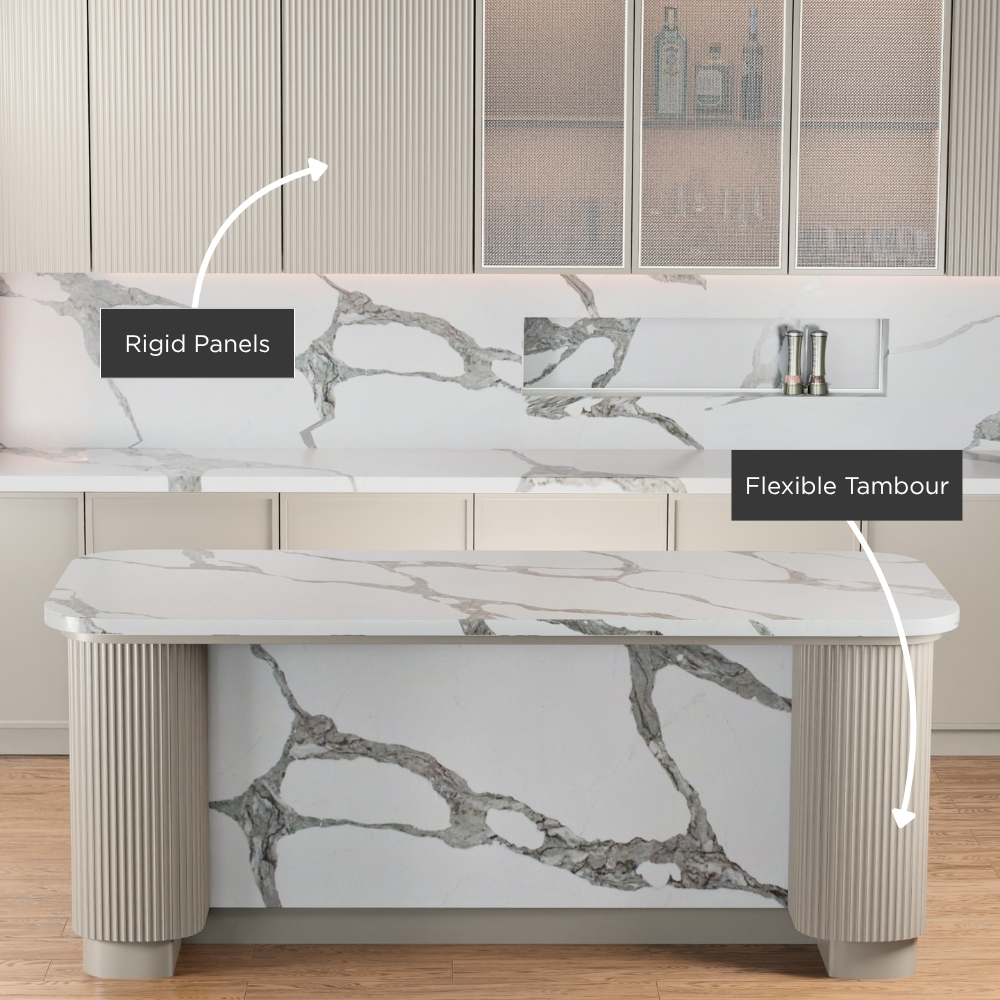
DESIGN TIP: Use flexible tambour for ONLAY applications to seamlessly wrap around curved surfaces, and use rigid reeded panels for INLAY applications where the wood must be captured within a protective frame.
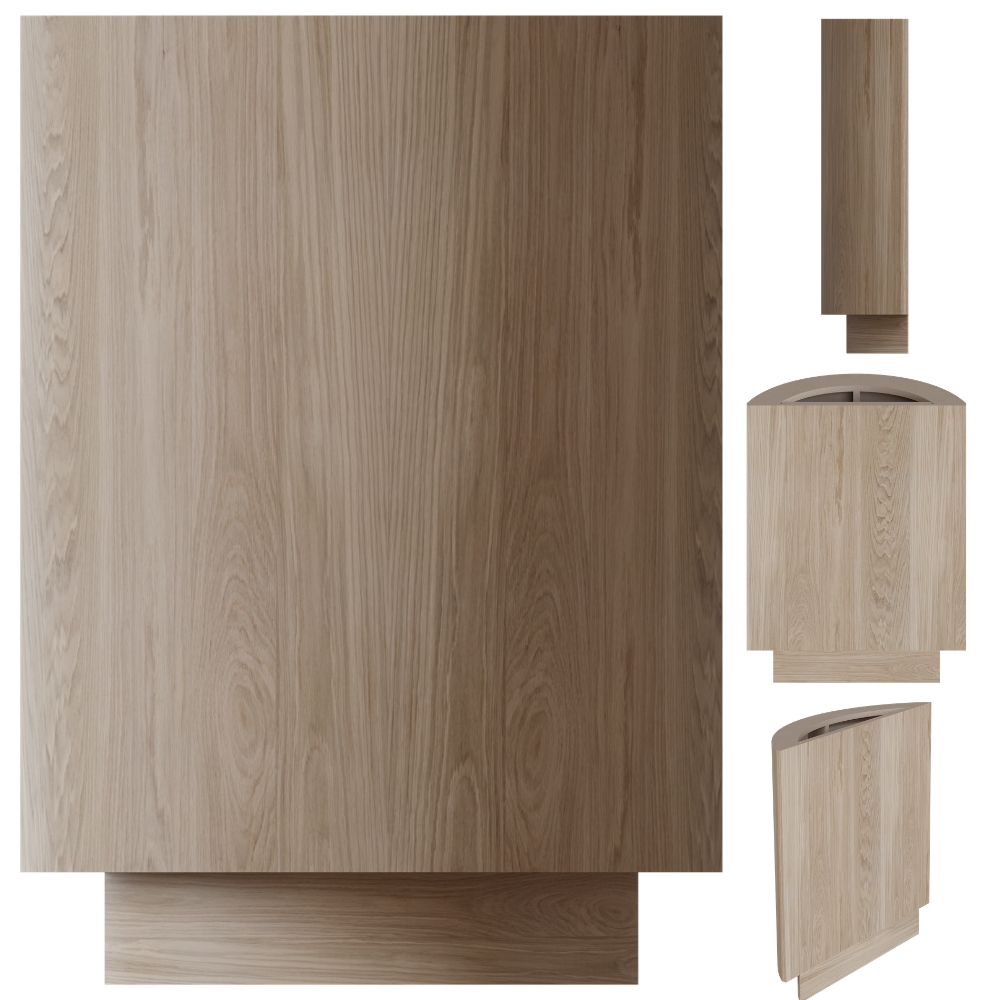
Radiused Components
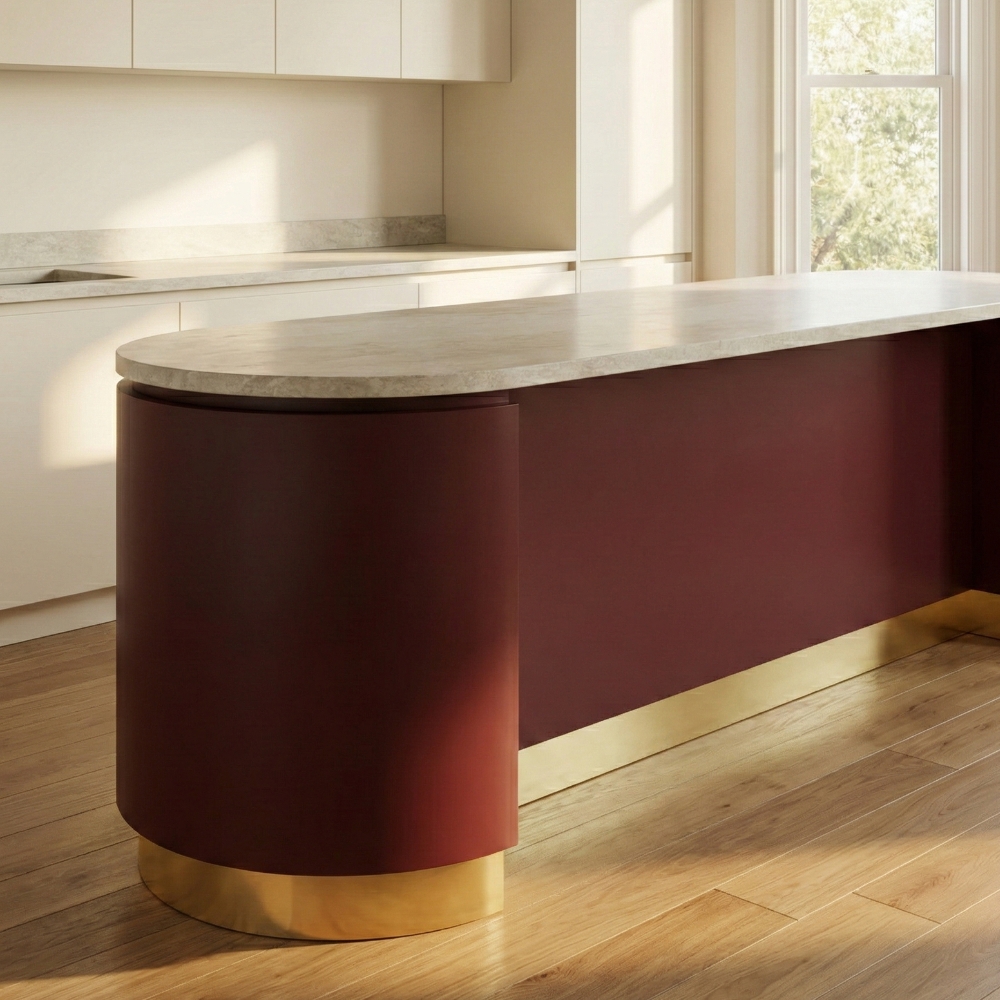
Curved cabinetry and softened architectural forms were among the strongest design themes at KBIS 2026. Radiused components help designers transition between surfaces while creating interiors that feel more fluid, inviting, and sculptural.
On the left: Radiused Base w/Toe Kick
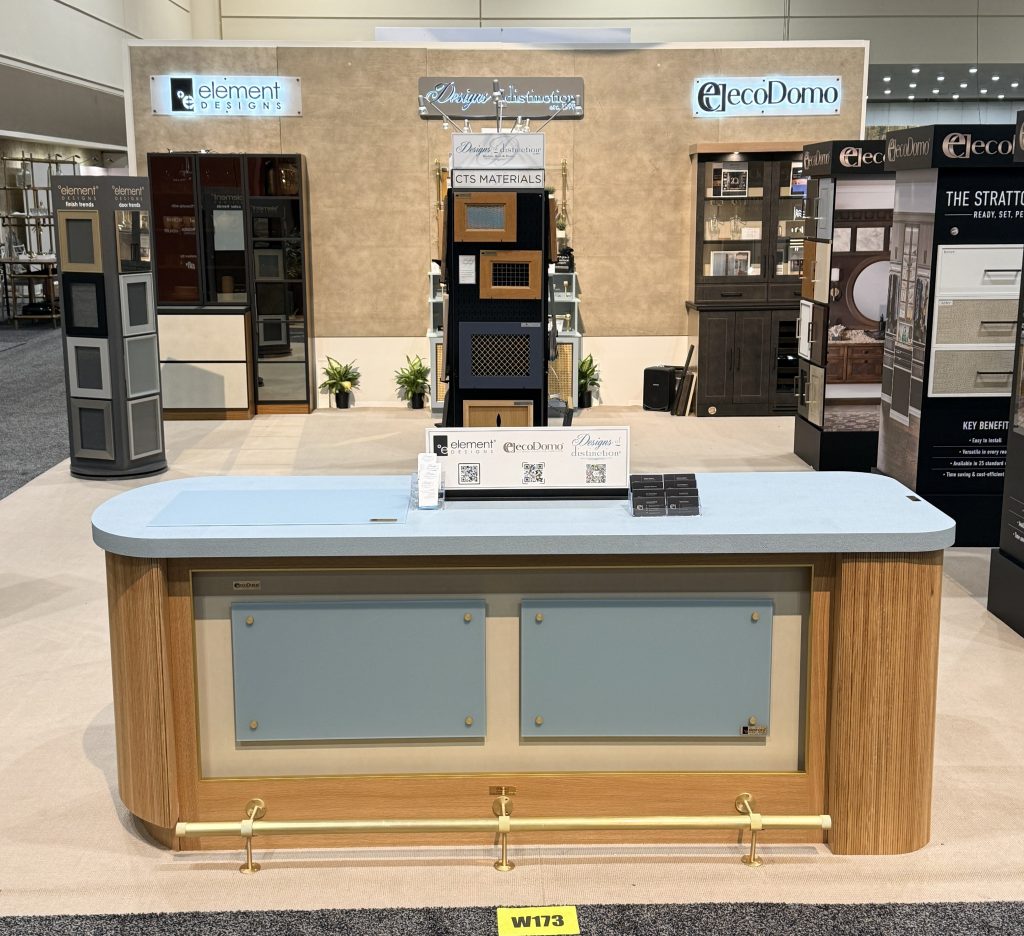
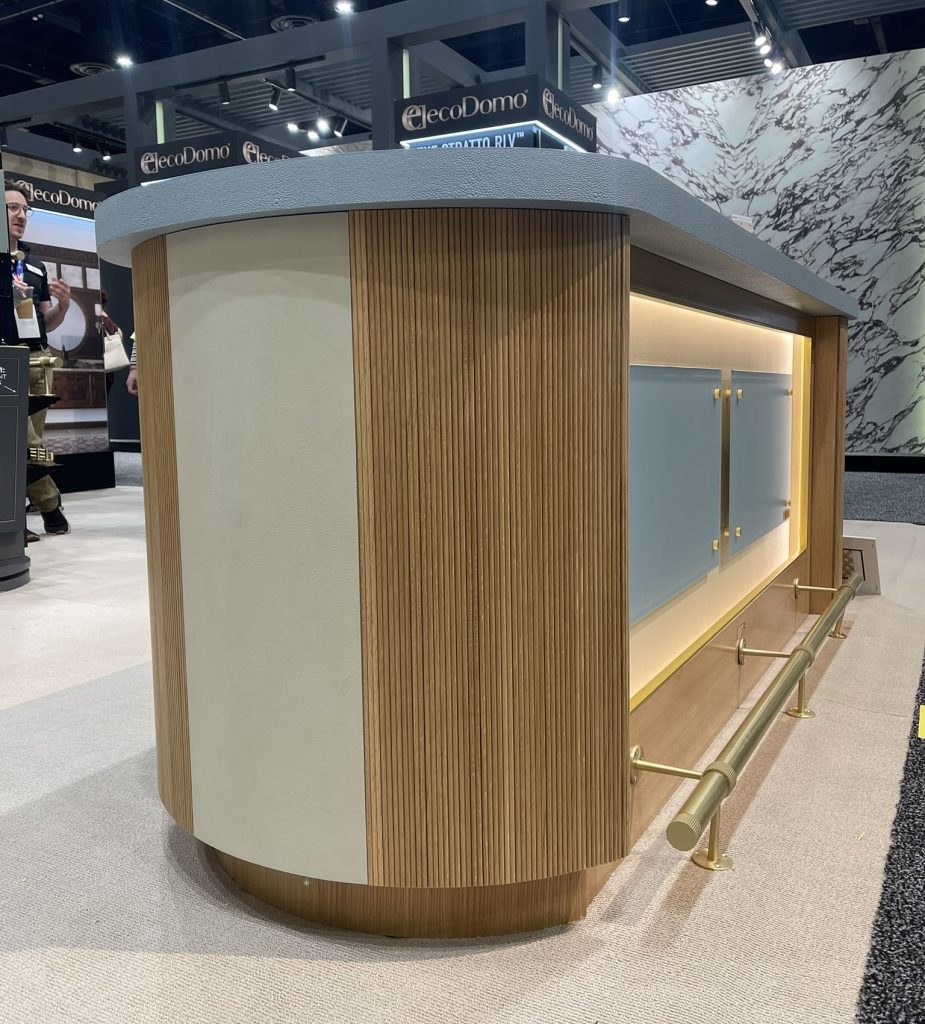
Centerpiece Island at Booth W173
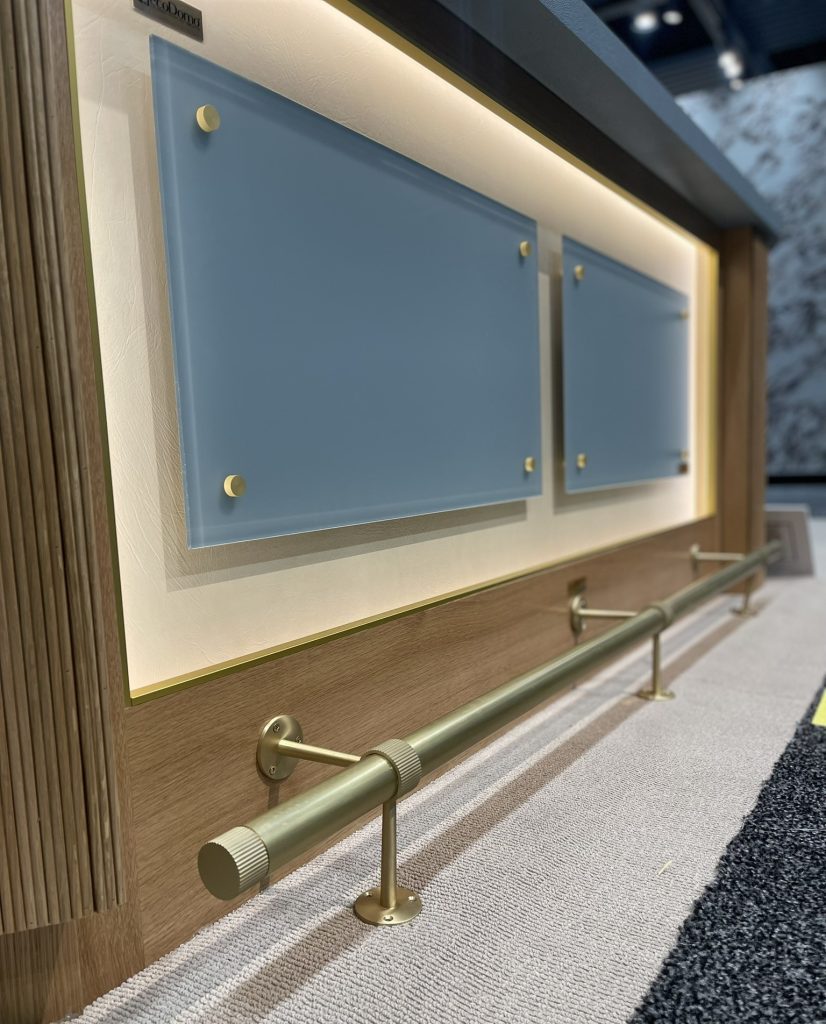
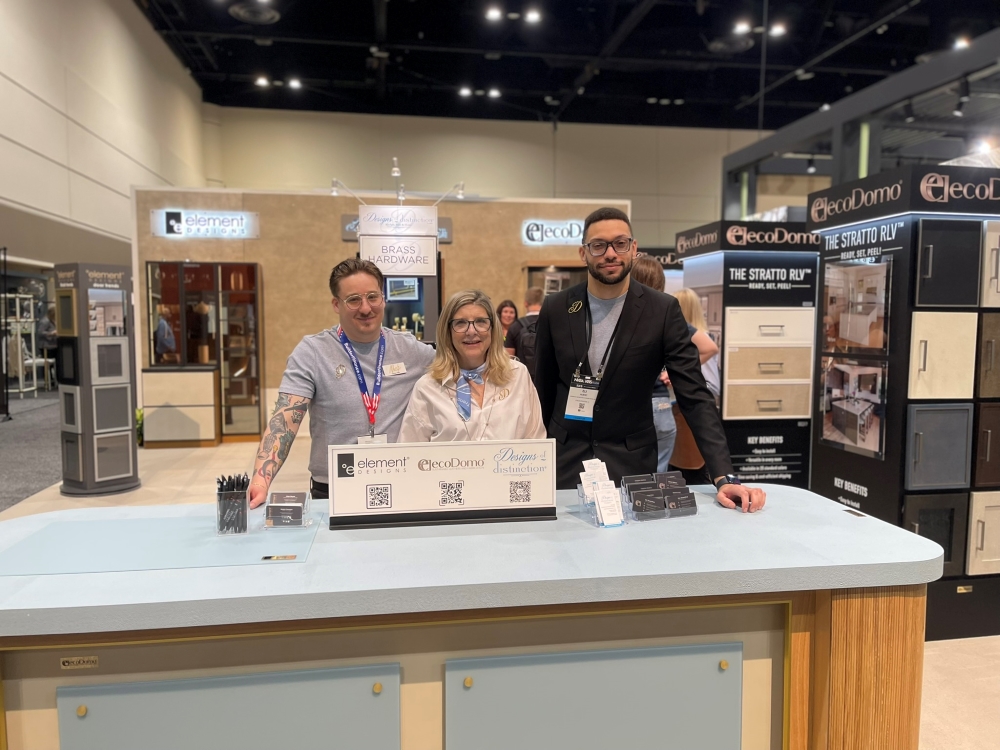
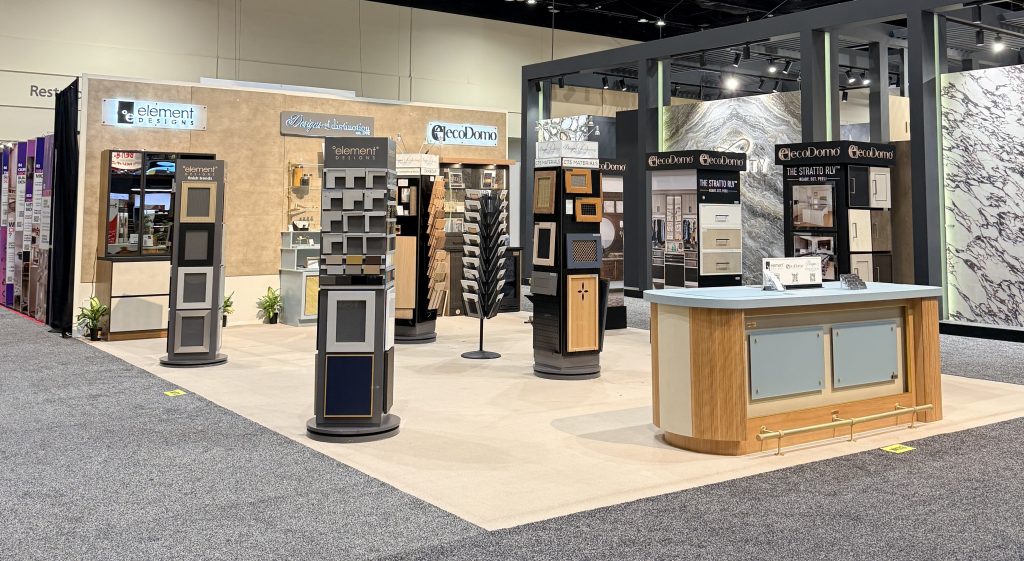
A collaborative showcase of material-driven design featuring EcoDomo leather, Element Designs backpainted glass, and Designs of Distinction architectural accents.
The centerpiece island at Booth W173 was designed as a collaborative showcase to highlight the unique capabilities of three distinct brands.
EcoDomo brought the surface to life with a striking blue leather countertop and matching leather drawer fronts, while Element Designs provided the sleek backpainted glass and aluminum-frame cabinet doors.
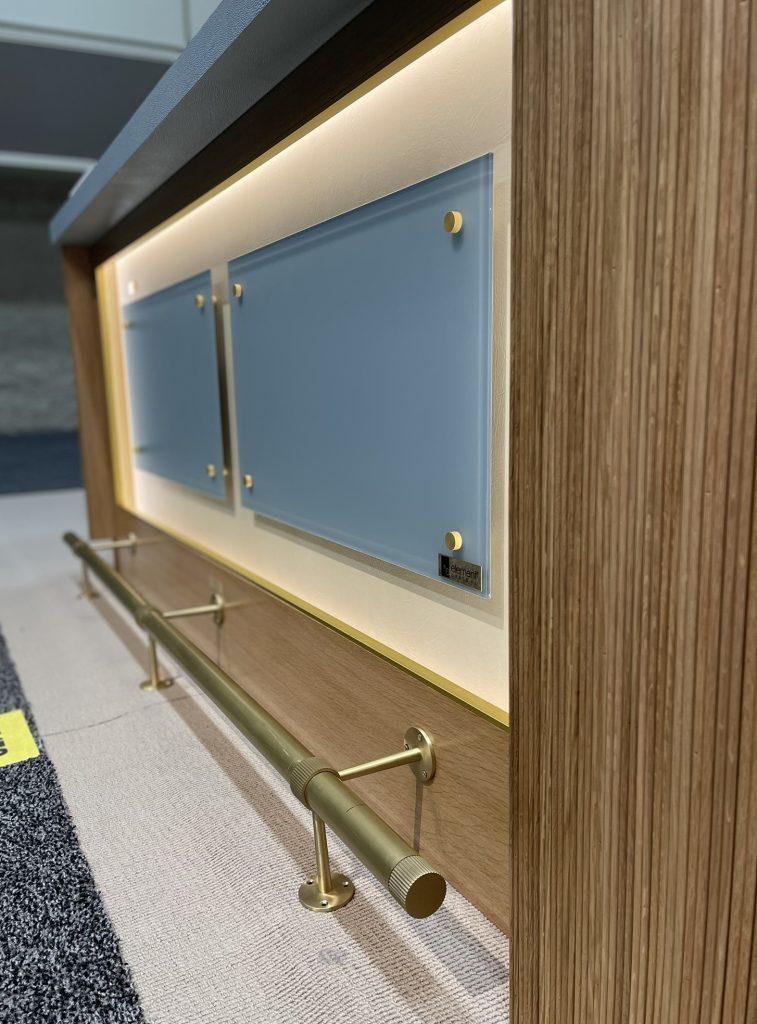
Designs of Distinction completed the piece with architectural decorative accents, featuring our flexible tambour, decorative grilles, brass foot rail, and metal trim.
Centerpiece Island Image Gallery
II. Beyond Booth W173: Partner Showcases
We were thrilled to partner with industry leaders like Plain & Fancy, Häfele, Wellborn Cabinet, and others across the show floor to showcase how our architectural components elevate custom cabinetry across the show floor.
Plain & Fancy
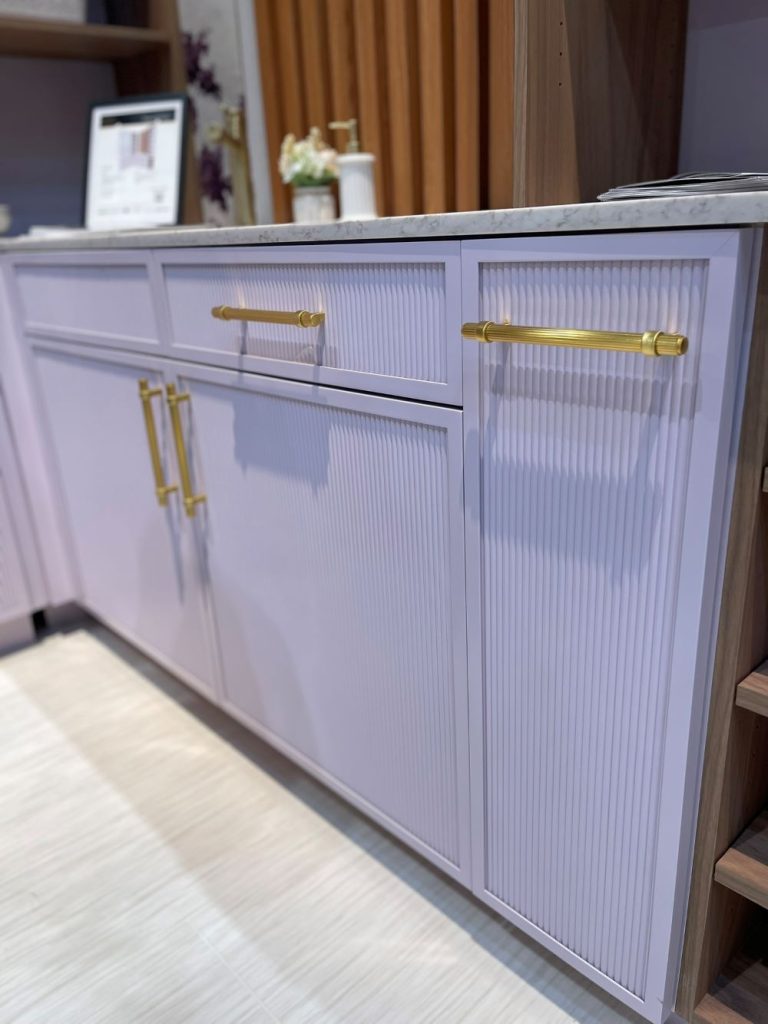
Plain & Fancy created a show-stopping display featuring our materials across multiple distinct applications.
- Seamlessly wrapped a custom curved island and matching bench with our Flexible Tambour
- Utilized our Rigid Beaded Panels as elegant cabinet door inserts in their striking “Pretty in Purple” display.
- Incorporated our Metal Accent Trim to frame and elevate a bespoke coffee station.


Häfele
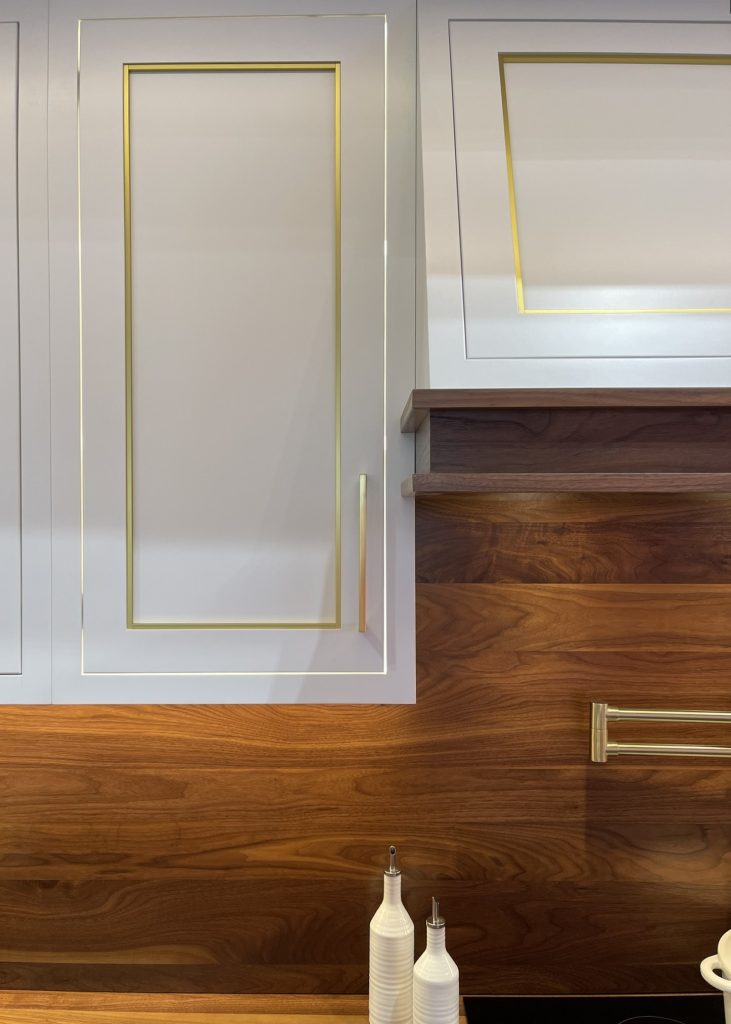
Häfele demonstrated the sleek functionality and sophisticated aesthetic of our real metal accents within their innovative setups.
Their booth prominently featured our award-winning Designer DripEdge® alongside matching Metal Accent Trim, proving how subtle metallic details can protect cabinetry while adding a clean, modern edge.


Wellborn Cabinet
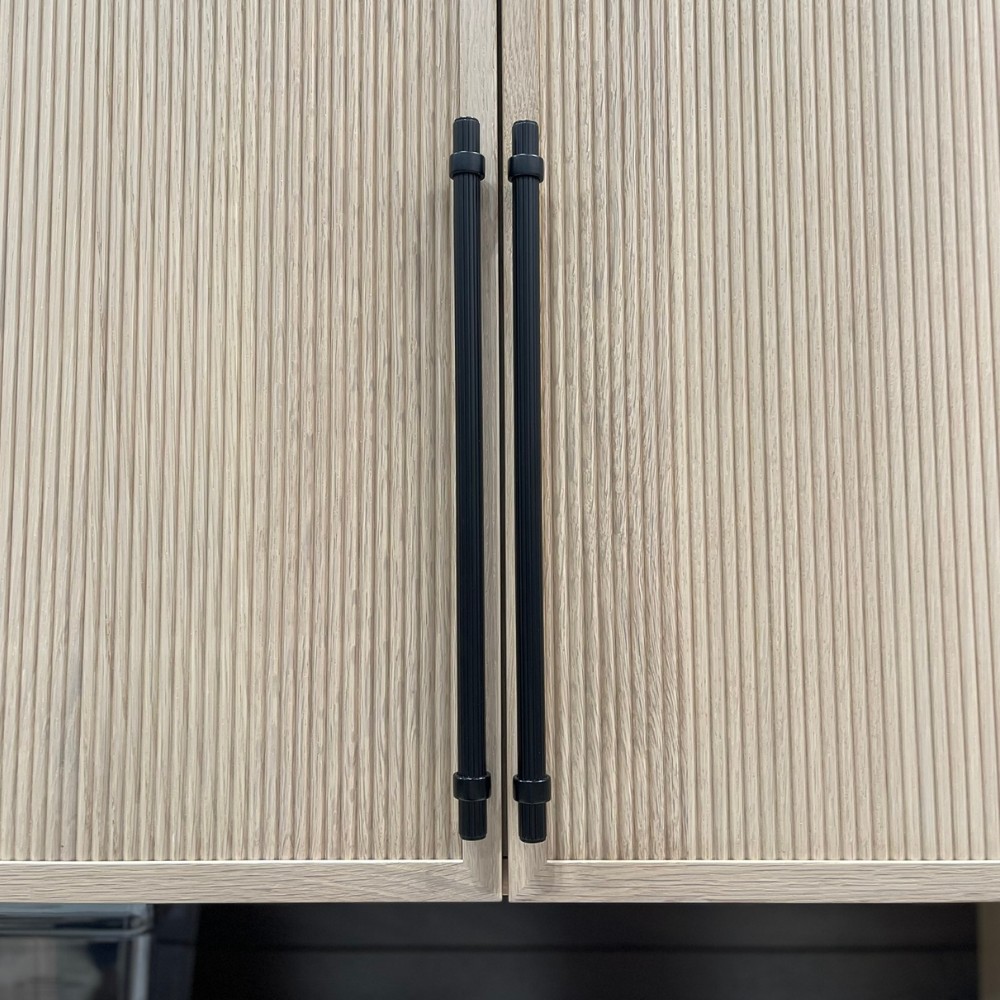
Wellborn Cabinet highlighted the structural beauty and tactile appeal of our materials by incorporating:
- Rigid Beaded Panels
- Decorative Grilles
- Metal Accent Trim
- Contemporary Gallery Rail
By integrating these sturdy, linear panels alongside refined metallic accents and grilles, they beautifully illustrated how designers can introduce rhythmic, crafted dimensional details and sophisticated material contrast into everyday spaces.


III. Trend Report
Throughout the show, one theme was clear: interiors are becoming more architectural, tactile, and material-driven. At Designs of Distinction® Booth W173, conversations with designers, architects, and builders revealed a growing demand for materials and components that bring texture, craftsmanship, and dimensional detail to cabinetry, furniture, and millwork.
KBIS 2026 revealed that modern interior design is evolving from flat minimalism into a more architectural, tactile, and material-driven approach. By utilizing dimensional elements like tambour panels, decorative grilles, and textured metals, designers are adding visible craftsmanship and structural depth to custom cabinetry and interior spaces.
Here are four key design movements emerging from KBIS 2026.
Interiors are becoming more architectural, tactile & material-driven.
The design industry is experiencing a decisive shift away from flat, unadorned surfaces in favor of layered material palettes and visible craftsmanship.
Designers are increasingly treating cabinetry, millwork, and everyday rooms as bespoke architectural features by integrating dimensional elements like flexible tambour, rigid beaded panels, and decorative metal grilles.
This evolution proves that texture is an essential design element, offering a level of softness, rhythm, and movement that standard flat panels simply cannot match.
By letting authentic, highly tactile materials take center stage, spaces are transformed into dynamic environments that feel warmly inviting, meticulously crafted, and visually sophisticated.
Trend 1: The Return of Architectural Detail
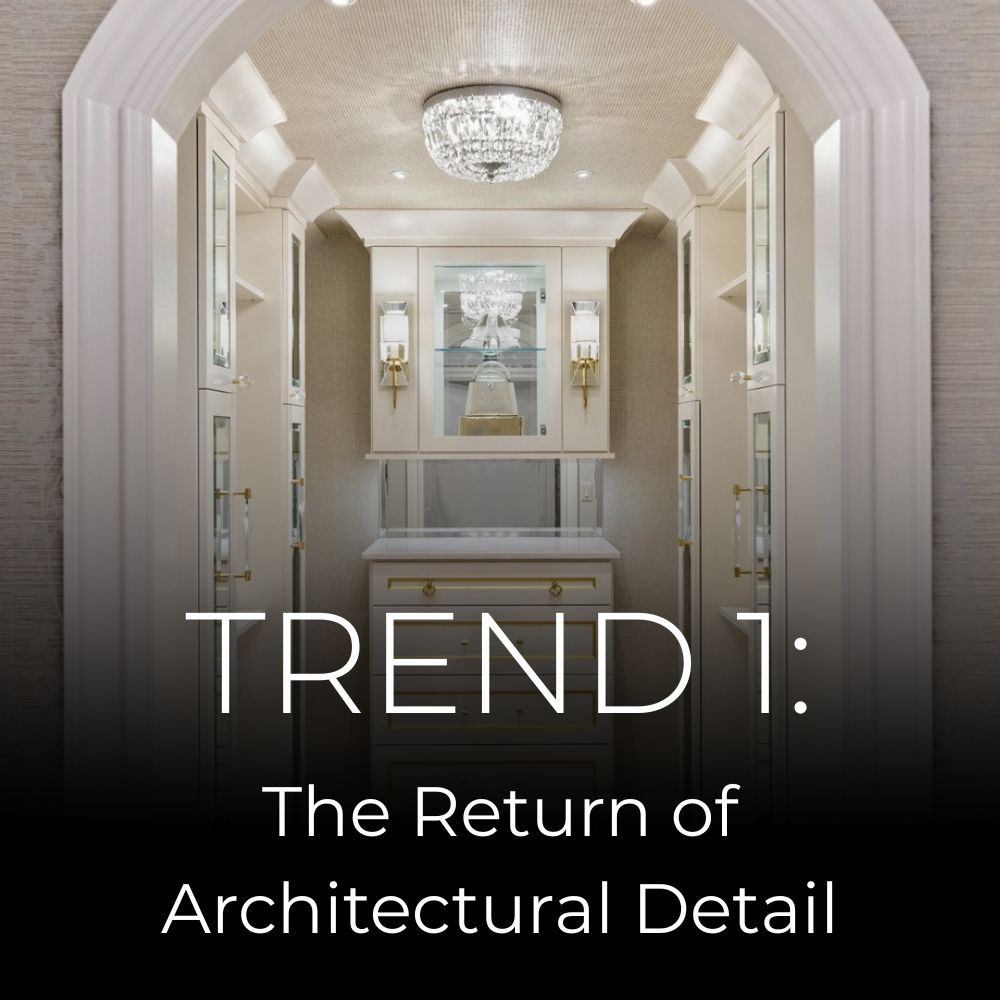
TL;DR: Minimalism is evolving as designers increasingly incorporate dimensional components like grilles, tambours, and textured metals into their designs. These architectural details add depth and craftsmanship, transforming standard cabinetry and millwork into bespoke, furniture-like pieces.
Minimalism isn’t disappearing, but it is evolving.
Designers are increasingly incorporating architectural details that add depth and craftsmanship to cabinetry and furniture. Rather than relying solely on flat slab surfaces, designers are introducing grilles, tambours, textured metals, and dimensional components to create visual interest and layered material palettes.
By utilizing parametric designs alongside decorative panels such as tambour, custom wood slats, or metal mullions, standard walls can be transformed into stunning 3D architectural features. This introduces texture and movement to a space without sacrificing valuable floor area.
Dimensional components—such as radiused mouldings, reeded panels, decorative metals, and metal trims—introduce depth, shadow, and physical form beyond flat surfaces.
Whether applied as wainscoting, ceiling treatments, or full accent walls, these details allow cabinetry and millwork to feel more like bespoke furniture and architecture.
Trend 2: Texture Is the New Luxury
TL;DR: Tactile materials and visible craftsmanship—such as knurled metals, woven mesh, and reeded panels—are becoming essential tools for elevating interior spaces. These elements add warmth and depth to simple forms, reflecting a growing preference for surfaces that invite touch and offer subtle visual contrast.
Tactile Surfaces, Visible Craftsmanship
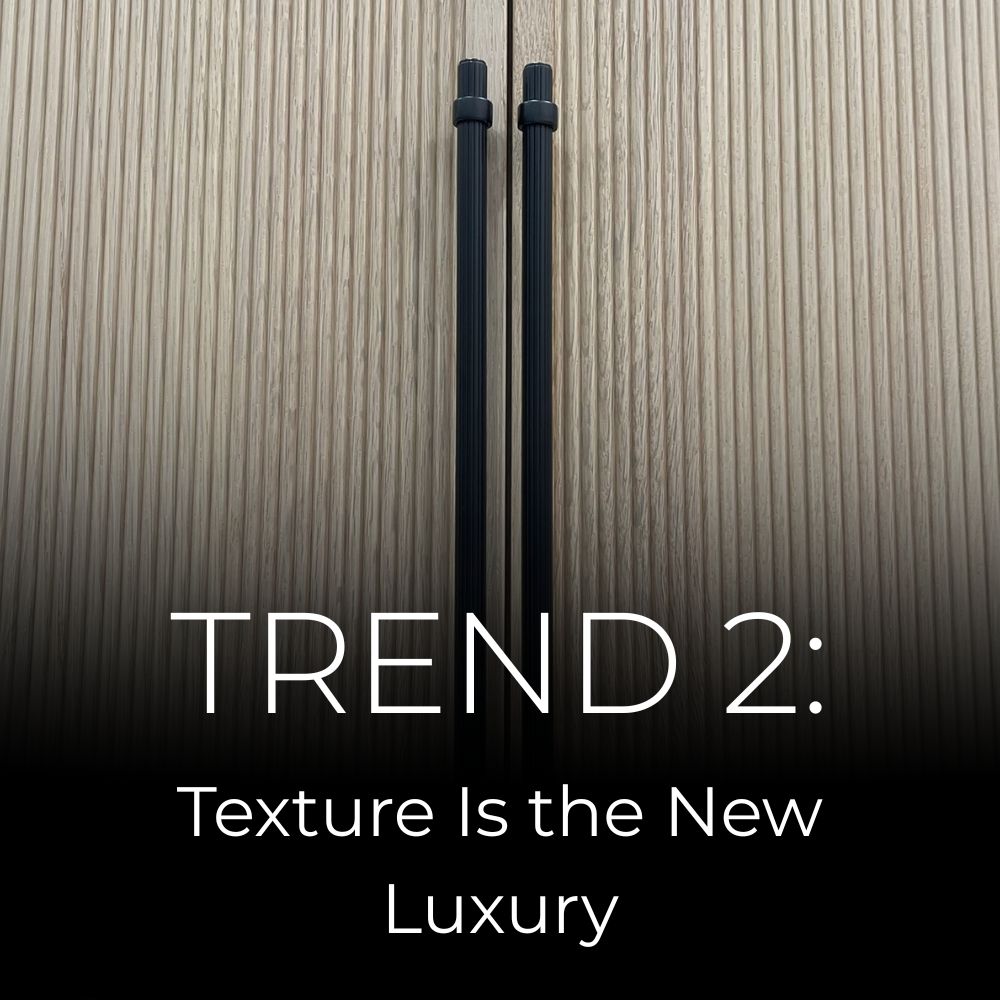
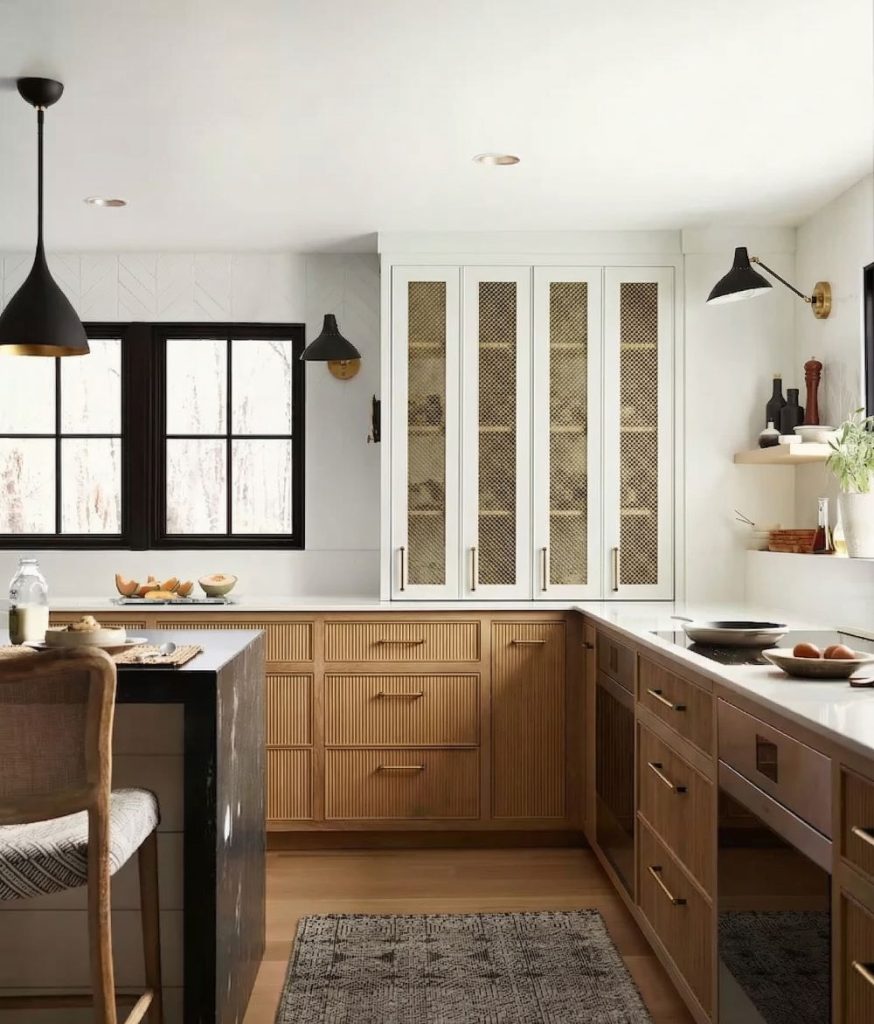
Across the show floor, materials with tactile surfaces and visible craftsmanship were everywhere. Knurled metals, woven materials, reeded panels, and decorative mesh are being used to add texture and depth to otherwise simple forms.
Tambour paneling is at the forefront of this movement, offering a level of softness and movement that flat surfaces simply cannot match. Its versatility is a major draw: stained dark and paired with brass or marble, tambour reads as elegant and traditional, while painted in a matte finish or left natural, it becomes an airy, modern, sculptural element.
Designers are embracing these materials because they invite touch, create subtle visual contrast, and serve as an essential design tool for elevating interior architecture.
Tambour’s versatility is a major draw: stained dark and paired with brass, it reads as elegant and traditional, while painted in a matte finish or left natural, it becomes an airy, modern, sculptural element.
Image Provided Courtesy of Wendy Scott, Timeless Closets & Cabinetry
Trend 3: The Rise of Curved Forms
TL;DR: Influenced by Art Deco and contemporary European design, curved cabinetry and softened architectural lines are rapidly gaining prominence. These rounded forms and radiused transitions help soften interiors, creating spaces that feel much more fluid, welcoming, and visually dynamic.
The New Era of Curved Cabinetry
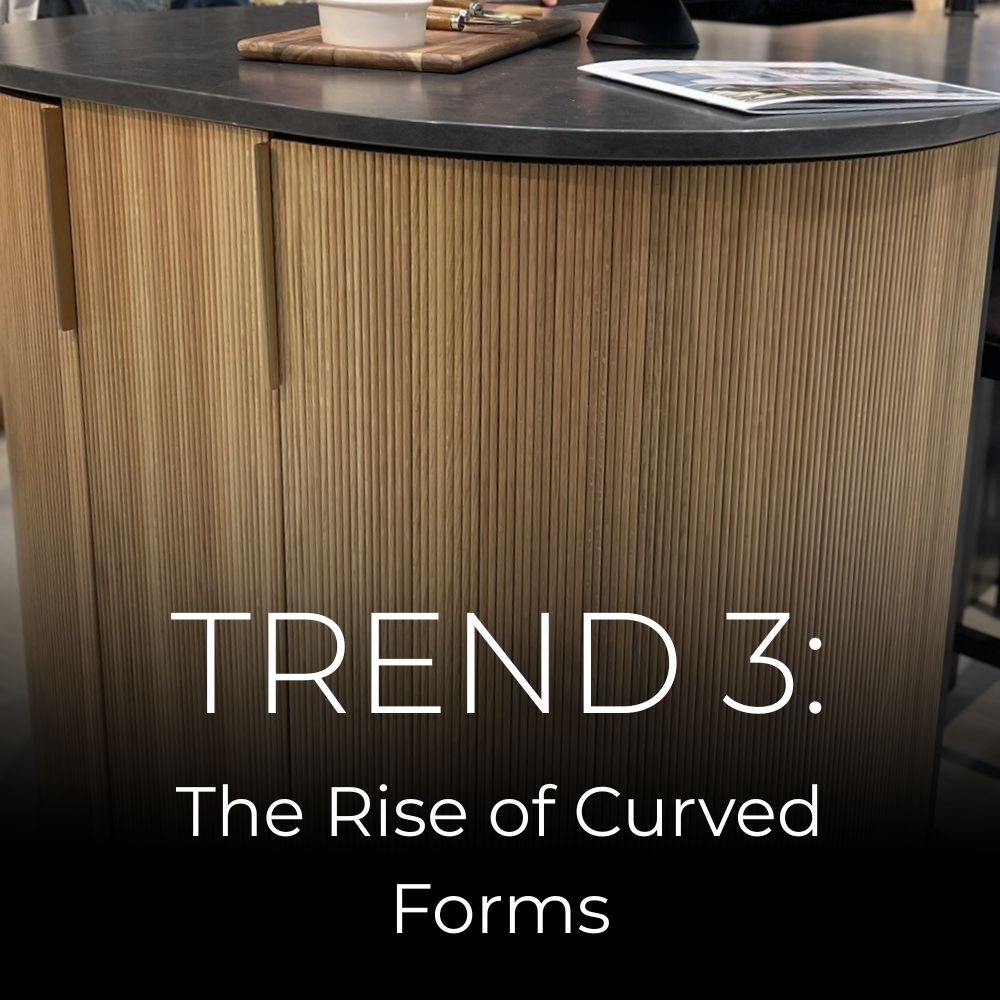
Another major theme at KBIS 2026 was the growing presence of curved cabinetry and softened architectural lines.
Influenced by both Art Deco geometry and contemporary European design, rounded forms are appearing in islands, furniture, millwork, and cabinetry transitions. The flexibility of materials like tambour makes them an incredibly effective way to wrap around tight curves, radiused islands, and even architectural columns to provide an impressive statement design.
These curved elements soften interiors and create spaces that feel more welcoming, fluid, and visually dynamic.
Trend 4: Materials as the Design Language
TL;DR: Designers are shifting toward a material-driven approach, where authentic materials serve as the primary focal point rather than just decorative afterthoughts. By utilizing elements like tambour panels, metal accents, and decorative grilles, texture and craftsmanship are embedded directly into the structural foundation of cabinetry and furniture.
Material-Driven Design
Designers are moving beyond purely stylistic choices and focusing more on material-driven design.
Rather than hiding construction details, authentic materials themselves are becoming the focal point, serving both aesthetic and highly functional purposes.
For example, tambour doors are being utilized as rolling covers for cabinets to save space in tight areas, seamlessly hiding appliances or entertainment centers while adding a contemporary twist to the classic roll-top desk.
Additionally, slatted wood paneling is increasingly being paired with acoustic felt backings to improve sound absorption and reduce echo in large, open-concept spaces. (NOTE: Acoustic Tambour is currently in our product development phase. We’re proud to offer Acoustic Tambour on a custom basis.)
Decorative grilles, metal accents, and tambour panels allow designers to introduce texture, pattern, and utility directly into the structure of their pieces.
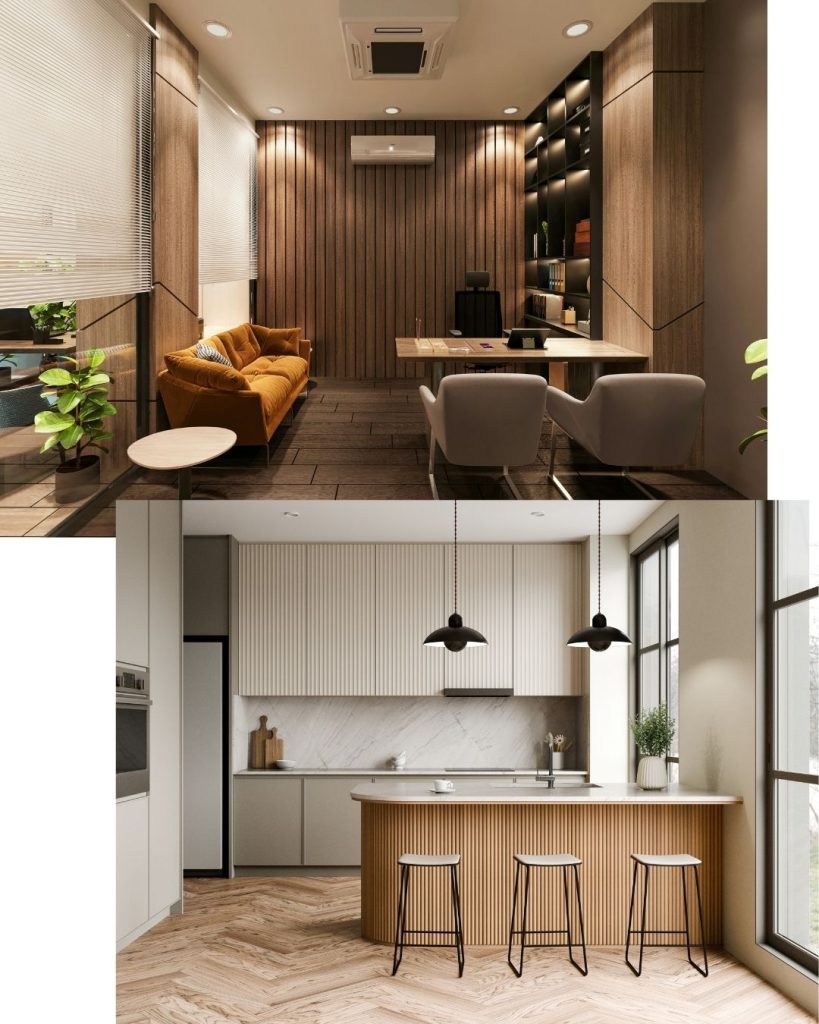
IV. Founder’s Perspective

From the desk of Designs of Distinction® Brand Founder, Kathryn Constantine
At the Kitchen & Bath Industry Show 2026, one of the most exciting things for our team was seeing how designers continue to reinterpret materials and architectural details in new ways. Over the years, we’ve watched kitchen and bath design evolve from highly traditional spaces to sleek minimalism—and now into something much more layered and expressive.
Designers today are bringing texture, craftsmanship, and architectural character back into cabinetry and interior spaces. What stood out most this year was the blurring of lines between high-end hospitality, commercial, and residential design. We are seeing dimensional millwork and tactile materials—once reserved for luxury cocktail lounges and boutique hotel reception desks—making their way into residential kitchens, living rooms, and private home offices. Decorative grilles, textured metals, tambour panels, and curved components are giving designers new ways to create depth and personality within these spaces.
Designers today are bringing texture, craftsmanship, and architectural character back into cabinetry and interior spaces.
None of this would be possible without incredible industry partnerships. A major highlight for me this year was our collaborative centerpiece island at Booth W173, designed to showcase the unique capabilities of three distinct brands. We partnered with EcoDomo, who brought the surface to life with a striking blue leather countertop and matching leather drawer fronts, and Element Designs, who provided the sleek backpainted glass and aluminum-frame cabinet doors. By pairing their innovative surface materials with our flexible tambour, decorative grilles, brass foot rail, and metal accent trim, we were able to demonstrate exactly how layered, material-driven design comes together to create a truly bespoke architectural feature.
At Designs of Distinction®, product development has always been driven by what designers are asking for next.
At Designs of Distinction®, product development has always been driven by what designers are asking for next. Many of the materials and components we showcased this year were developed in response to the way designers are pushing interiors beyond flat surfaces and simple forms. It’s inspiring to see how these materials are being incorporated in ways that feel both modern and timeless.
We’re grateful to the designers, builders, and architects who visited our booth this year and shared their ideas with us. Those conversations continue to shape how we think about materials, craftsmanship, and the future of interior design.

From the desk of Designs of Distinction® Marketing Director, Jenny Rhead
FROM A MARKETING PERSPECTIVE
At Kitchen & Bath Industry Show 2026, my role is a little different—I’m not just looking at the materials and products themselves, but how people respond to them.
Throughout the show, what stood out most was how quickly designers and builders connected with materials that offered immediate visual and tactile impact. The pieces that drew people in weren’t necessarily the largest or most complex—they were the ones that invited interaction. Materials people wanted to touch, compare, and imagine in their own projects.
From a brand perspective, that interaction is everything.
At Designs of Distinction® Booth W173, we saw firsthand how presentation shapes perception. When materials are displayed in a way that feels curated and intentional, they become more than components—they become part of a larger design story.
Another key takeaway was how designers are gathering information today. Conversations in the booth often extended beyond the physical display—people were already thinking about how they would revisit what they saw. Whether through follow-up emails, digital lookbooks, or sample kits, there’s an expectation that the experience continues after the show.
That shift reinforces the importance of creating not just products, but tools for specification and inspiration—resources that designers can return to when they’re actively working on a project.
KBIS doesn’t end when the show floor closes. In many ways, it’s just the beginning of the design process.
Join me and the Cabinet Makers Association for From KBIS to the Shop: Trends You Can Actually Build (and Sell) webinar on Thursday, 5/14. Register for the webinar here.
Follow us & subscribe to stay in the loop about New Products, Announcements, Discounts & More! We only send emails 1-2x/month, and we never spam your inbox or sell your information.