
 sign in
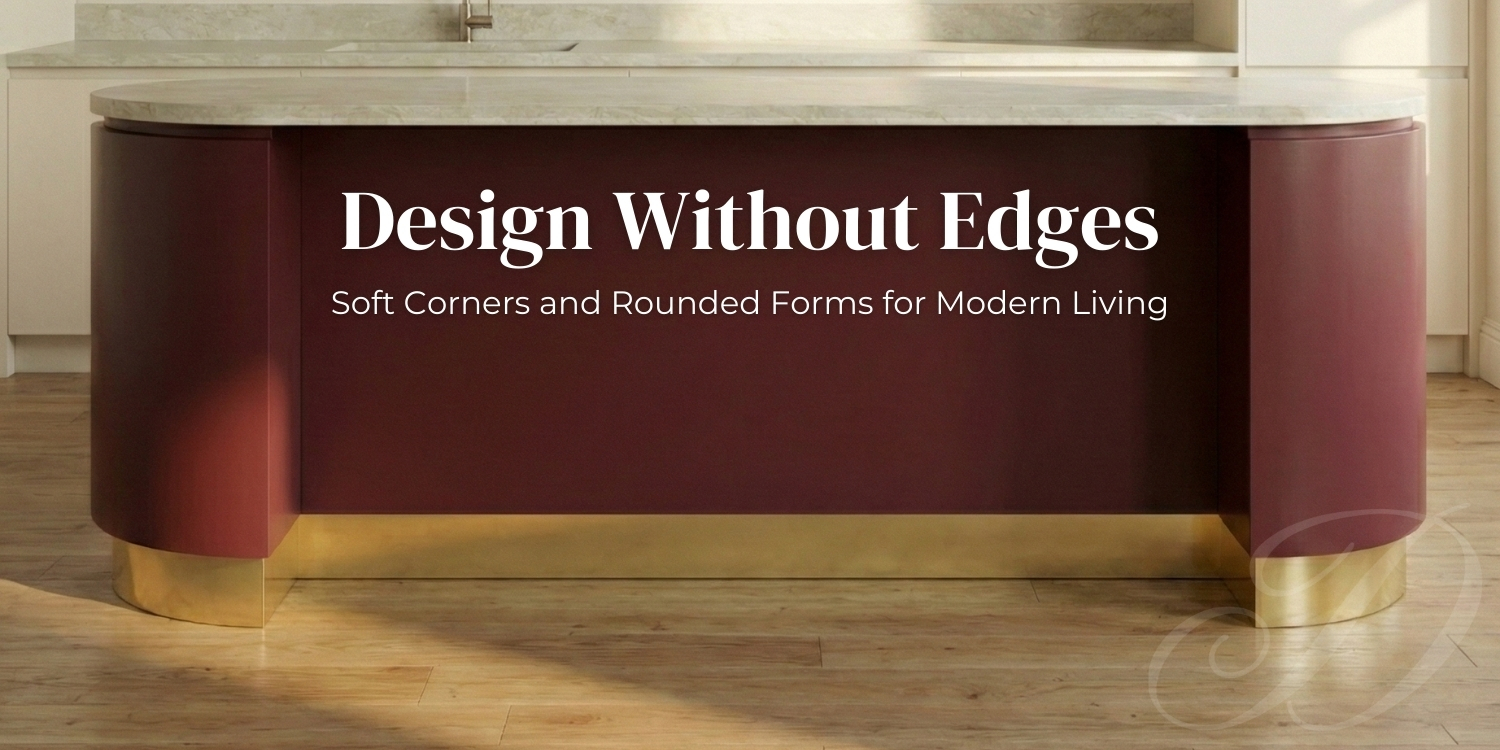
A NEW ERA OF CURVED CABINETRY
Embracing the resurgence of soft geometry with architectural components designed for precision, repeatability, and human-centered design.
The Return of the Curve
Interiors are losing their edge—literally. Across kitchens, baths, and living spaces, design is softening. Sharp corners are giving way to rounded edges, radiused forms, and sculptural details that feel more human, more inviting, and more intentional.
Influenced by the curved geometry of early 20th-century Art Deco design and reinterpreted through modern European cabinetry, rounded forms are reshaping how today’s spaces look—and how they feel,.
Design without Edges explores this shift and introduces the architectural components created to support it.
By swapping out harsh corners for gentle curves, designers make kitchens and baths not just prettier, but more comfortable and livable.
Kathy Constantine, brand founder & vice president
From Art Deco to Modern North America
Rounded geometry has long been associated with elegance. In the 1920s and 30s, Art Deco designers used curved profiles to bring luxury and movement to rigid structures.
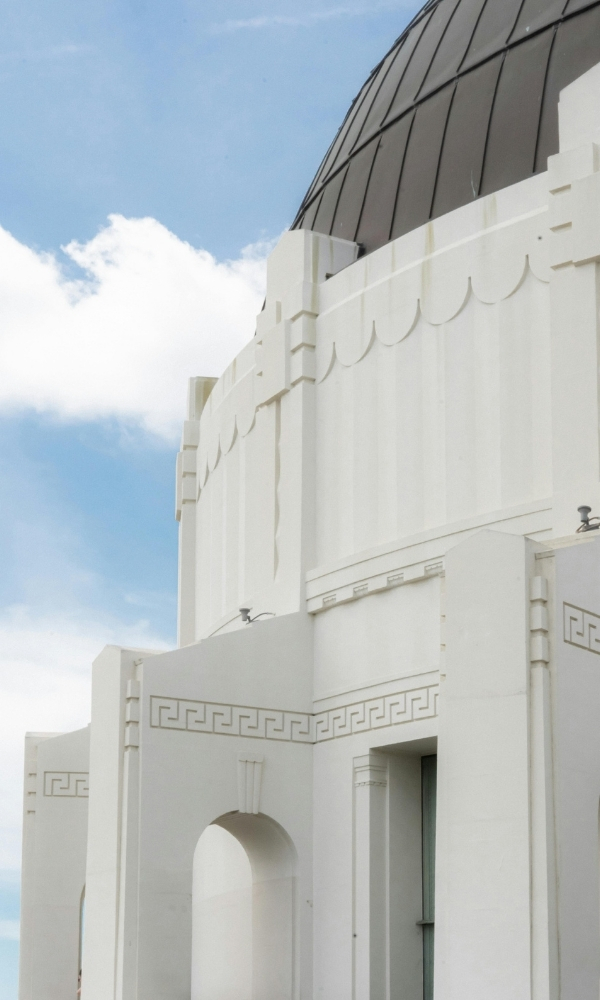
Art Deco designers embraced rounded corners and curvy designs, from the ornamentation atop the Chrysler Building to the sleek, aerodynamic lines of Streamline Moderne architecture.
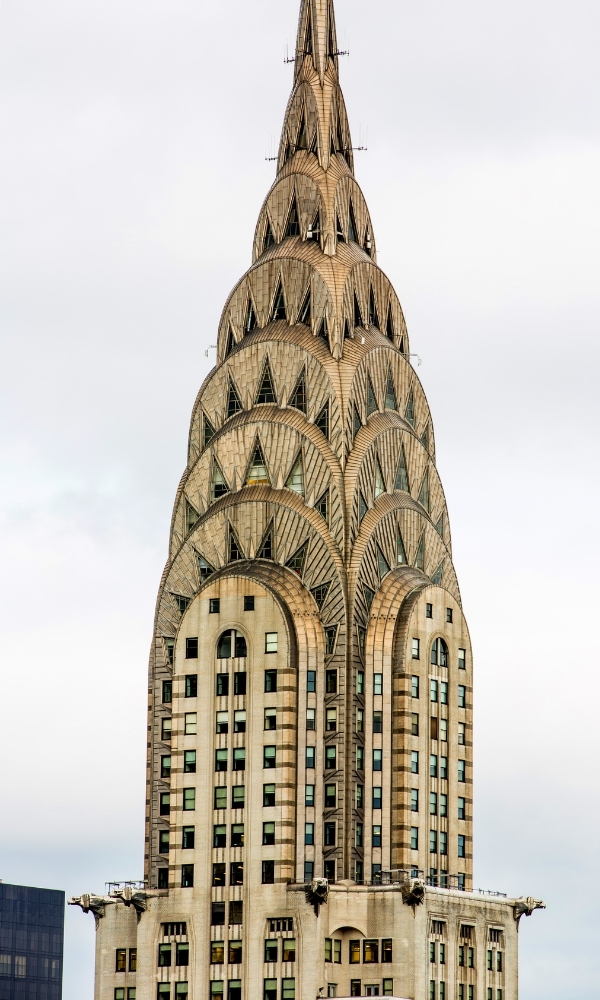
Chrysler Building
New York City
Griffith Observatory
Los Angeles
Today, designers are revisiting these principles—not as ornamentation, but as structure. After dominating expos in Italy* & abroad, this “rounded renaissance” has arrived in North American kitchens and baths.
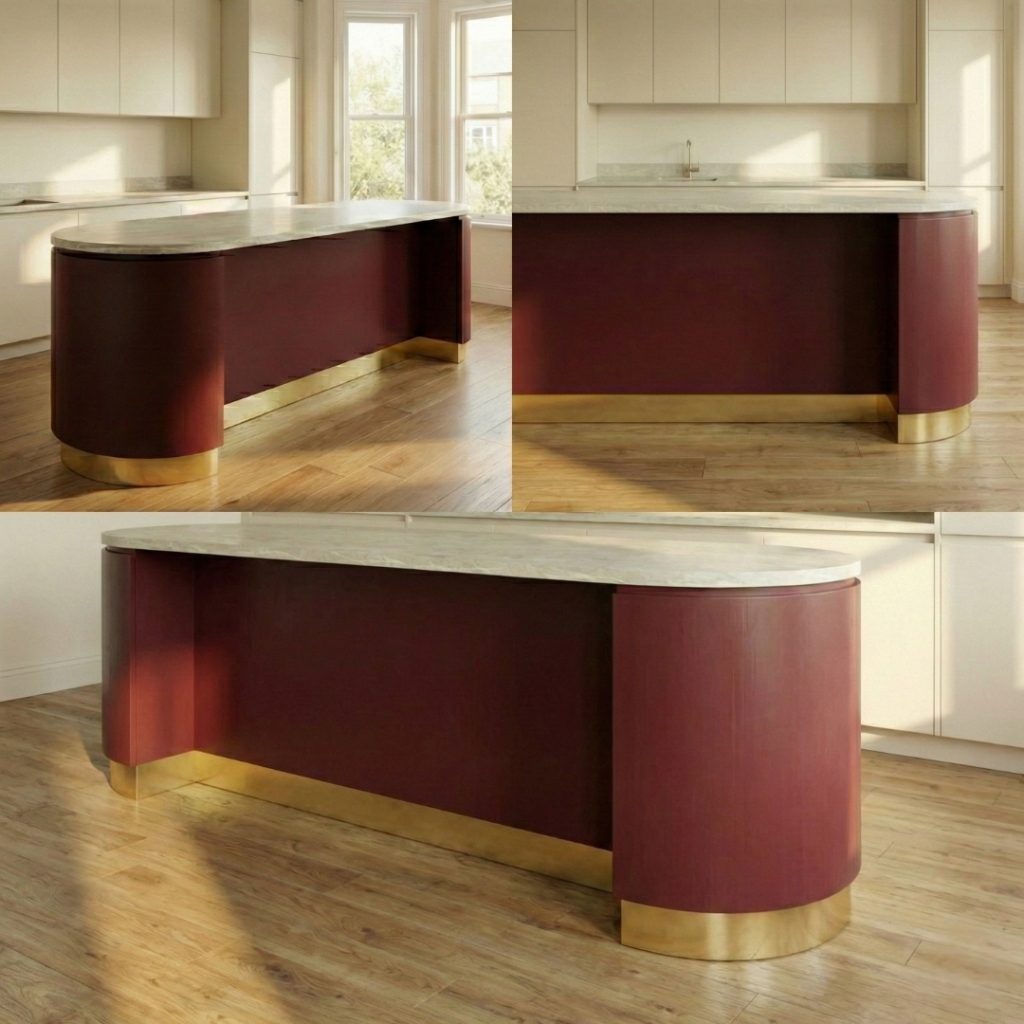
The “Rounded Renaissance” Look Characteristics:
• Visual Flow: Reducing harsh transitions to guide the eye comfortably through a room.
• Biophilic Comfort: Mimicking organic shapes found in nature to create a calming, stress-reducing environment.
• Sculptural Presence: Transforming standard box cabinetry into considered, furniture-style pieces.
*Italian Expos like Salone del Mobile, ExpoSicam Pordenone, and EuroCucina.
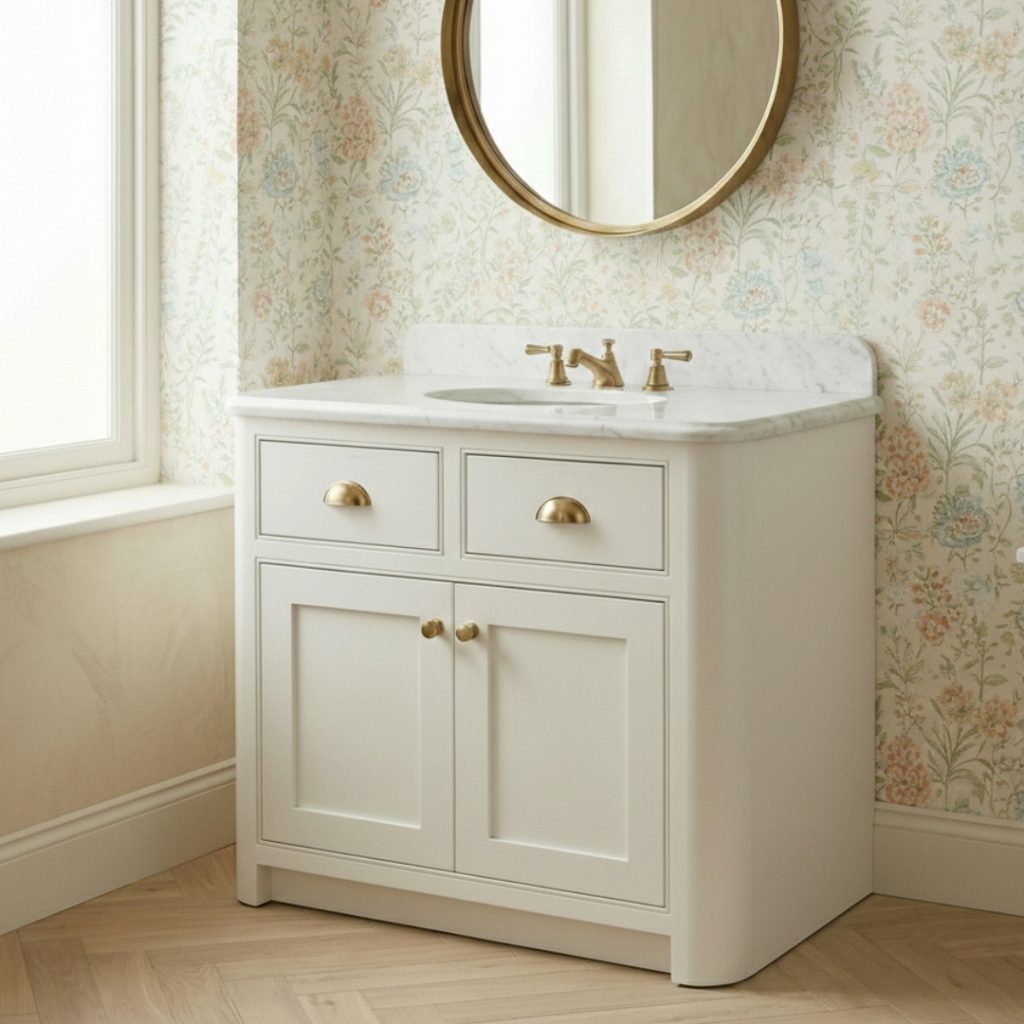
On the left: Island constructed with Radiused Bases.
The Components: Designed to Support the Curve
As this design language gains traction, designers and makers need practical solutions to execute it. Designs of Distinction® introduces a system of spec-ready components that bridge the gap between design vision and build reality.
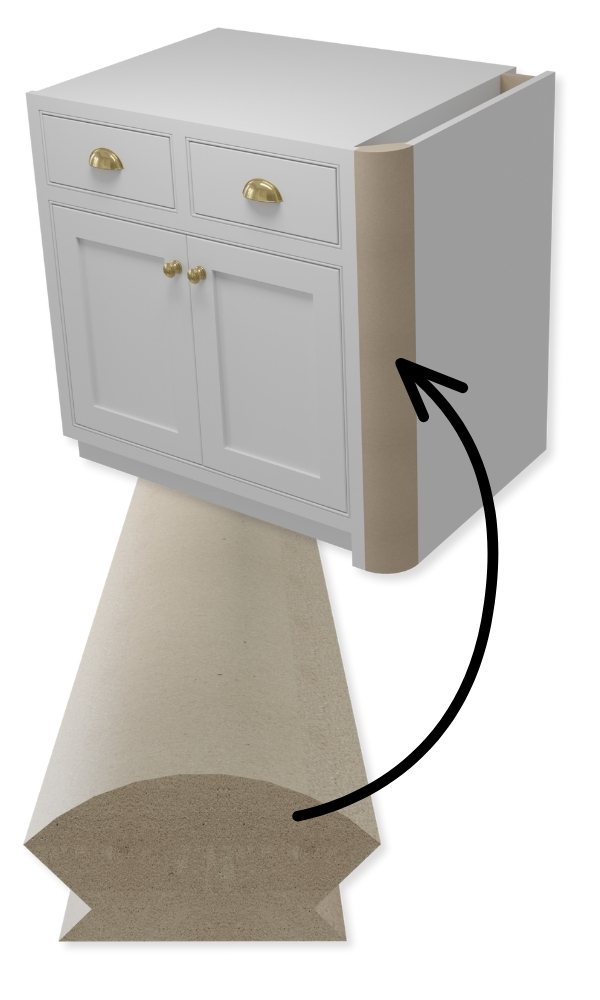
Radiused Corner Mouldings
The Vertical Transition
Softly curved and Art Deco–inspired, these mouldings transform sharp cabinet and furniture edges into smooth, architectural transitions.
• Refined Detail: Designed to add elegance and dimension to cabinetry and furniture.
• Material: Crafted from high-quality MDF (Medium Density Fiberboard).
• Finish Flexibility: Supplied unfinished, ready for paint or veneer to match any design palette.
• Application: Ideal for vertical transitions, island corners, and exposed edges.
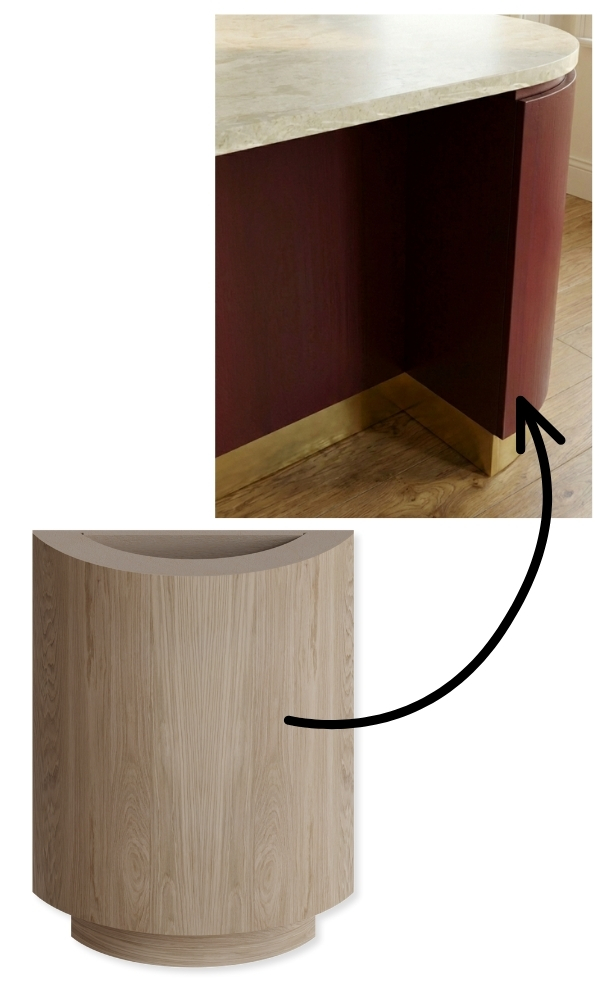
Radiused Bases
The Horizontal Foundation
Radiused Bases provide the visual weight and grounding needed to complete rounded cabinetry and furniture designs.
• Architectural Weight: Designed to anchor curved forms with sculptural presence.
• Customizable: Available in custom sizes to fit specific millwork requirements.
• Versatile Configuration: Offered with or without toe kick space to support both architectural and furniture-style applications.
Pro-Tips: Designing with the System
For Designers & Specifiers
Rounded forms often require more explanation than standard millwork. Here is how to apply these components to achieve a “custom shop” look with spec-ready parts.
The “Furniture Look” vs. The “Built-In”
One of the key features of the Radiused Base is the toe kick customization.
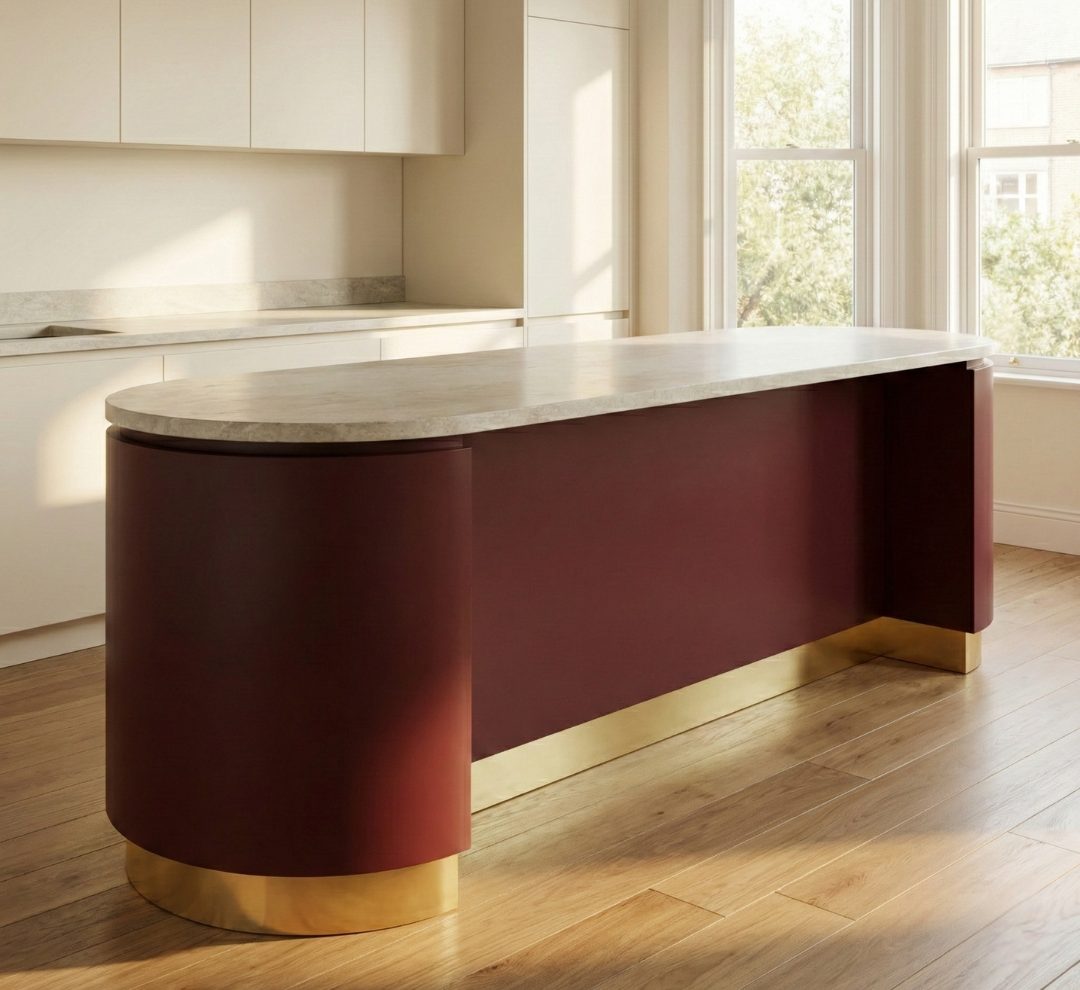
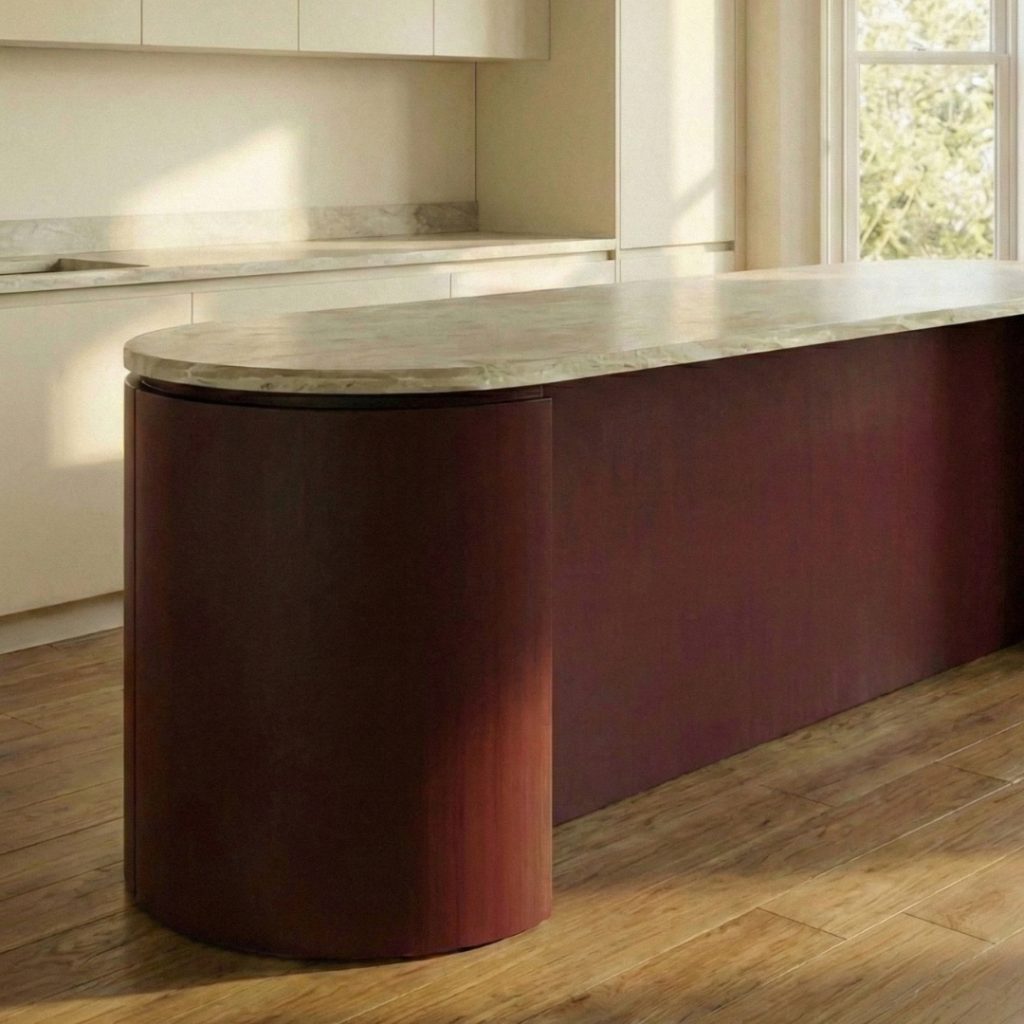
For Statement Pieces (Islands & Vanities)
Specify the base without a toe kick.
This allows the piece to sit flush with the floor, grounding the object and making it look like a standalone, heirloom piece of furniture rather than a built-in box.
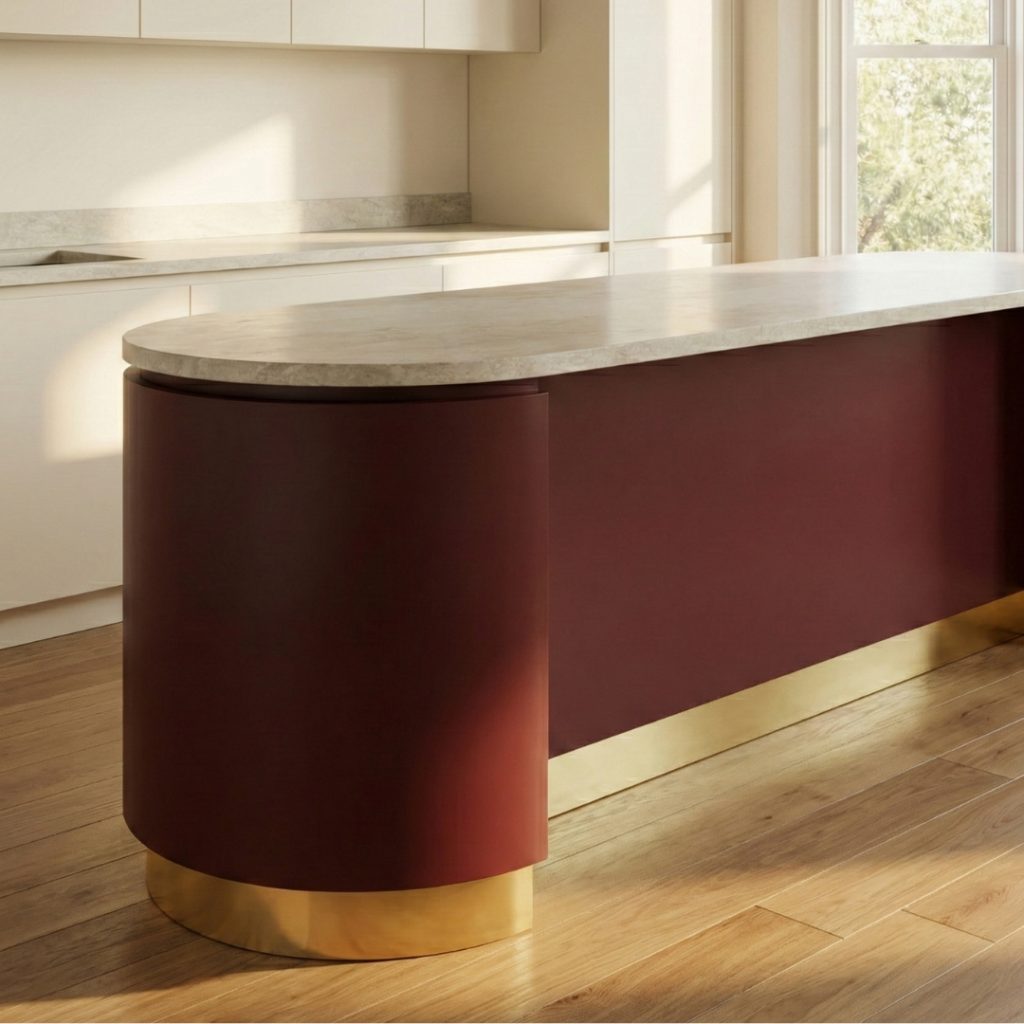
For Integrated Cabinetry
Specify the base with a toe kick.
This maintains the continuous horizontal line of the room and match adjacent linear cabinetry.
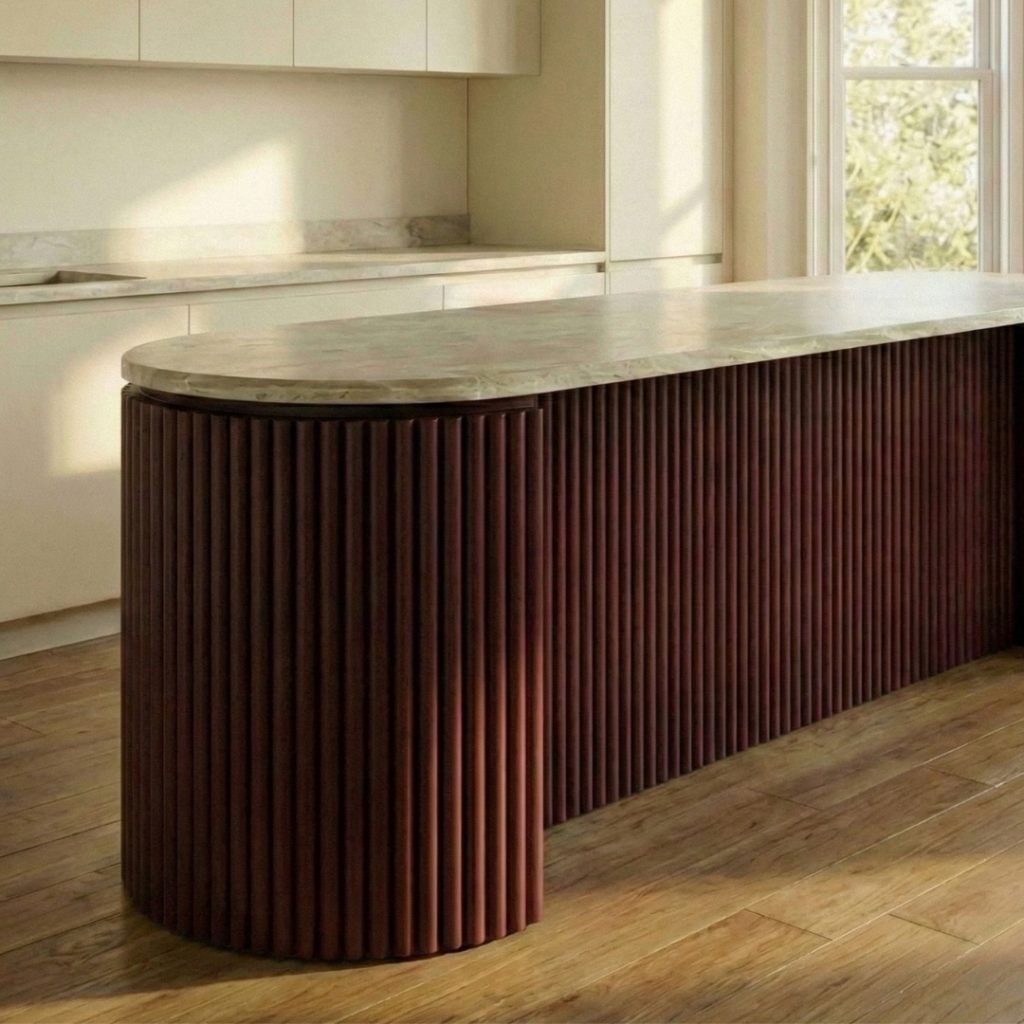
The “Wrapped” Look
While these components are made of high-quality MDF or North American hardwoods for superior paint or stain acceptance, they are also excellent substrates for flexible veneers and flexible tambour panels. Applying a vertical grain veneer or flexible tambour panel over the radiused corner creates a seamless “wrapped” look that mimics solid wood bending but with greater stability.
Technical Specifications
Built for Makers
We bridge the gap between design vision and build reality. These components are engineered for precision, ensuring that the “organic” look is achieved through repeatable, efficient installation.
| Feature | Radiused Corner Moulding | Radiused Bases |
| Material | High-Quality MDF (Paint/Veneer Grade). Soon to be available in select North American Hardwoods. | North American Hardwoods |
| Origin | Made in the USA | Made in the USA |
| Profile Style | Art Deco Inspired / Soft Radius | Architectural / Sculptural |
| Customization | Standard Lengths / Cut-to-Length Capable. Custom Sizes & Materials Available with a Quote. | With or without Toe Kick. Custom Sizes & Materials Available with a Quote. |
Note: The exposed MDF cross-section reveals a high-density substrate, ensuring sharp machining and smooth paint acceptance without the “fuzz” associated with lower-grade materials.
See It. Feel It. Specify It. Find us at KBIS 2026, Booth W173.
Rounded forms are more than a trend; they represent a shift toward spaces that feel warmer, calmer, and more human. By pairing historical inspiration with modern manufacturing, Designs of Distinction gives you Rounded Forms for Modern Living with the materials & components to create your own Design without Edges.
See these components & more at KBIS 2026, Booth W173.
Booth W173
A Collaborative Booth Experience You Won’t Want to Miss
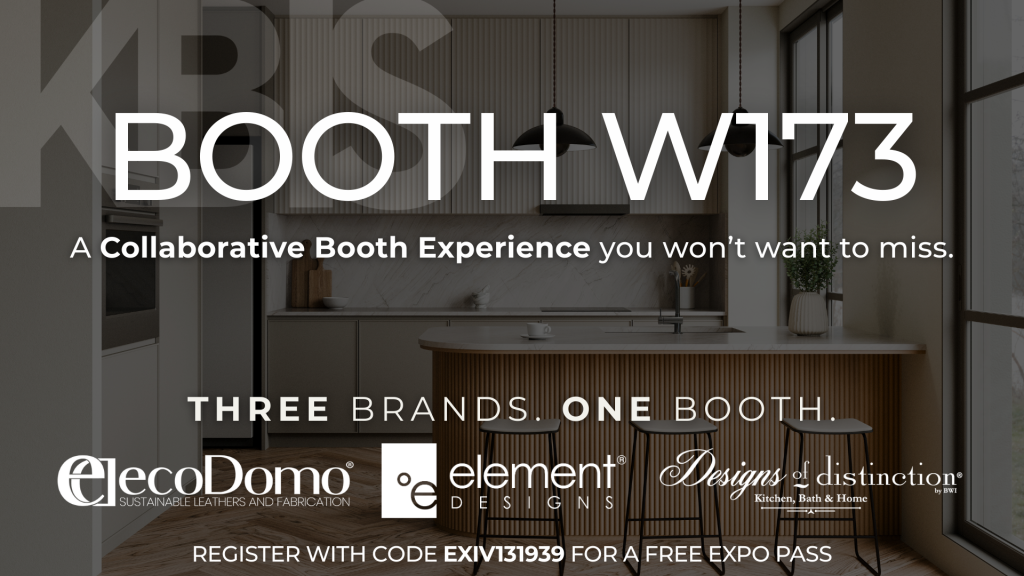
Three innovative brands — Designs of Distinction®, EcoDomo, and Element Designs — are joining forces once again at KBIS 2026 in Orlando to bring you an immersive multi-material design environment. From wood and metal to leather and glass, see how our complementary products integrate seamlessly to elevate cabinetry, millwork, and architectural spaces.
Explore coordinated vignettes, discover new launches for 2026, and meet with experts from all three brands in one beautifully cohesive destination. This is the booth designers, builders, and architects won’t want to miss.